OpenAI unveiled a new service that allows companies to manage their own information and communicate directly with potential customers through ChatGPT. The service provides company-specific profiles and user analytics, as well as dedicated AI agents that answer customer inquiries, as part of OpenAI’s strategy to expand ChatGPT from a simple information-search tool into a platform connecting businesses and consumers.
OpenAI announced on the 10th (local time) via its official blog that it had launched the beta version of “Business Hub,” which allows companies to register and manage their information on ChatGPT. The service supports companies in leveraging ChatGPT, which has 1.2 billion weekly users, as a new customer touchpoint.
Companies can register a profile, complete the verification process, and then edit information about their products and services, pricing, inventory status, and more. They can also directly register product information feeds or connect a Shopify account to synchronize the latest information.
Companies can also use Business Hub to see how ChatGPT users come across their information. It compiles and provides the number of company mentions over the past 28 days, website click counts, and topics that repeatedly appear in related conversations. This enables companies to identify which products or services interest customers and improve outdated or insufficient information.
OpenAI emphasized that it does not disclose individual conversation content to companies in order to protect user privacy. The information available to companies is limited to statistics compiled from interactions above a certain threshold, and users’ ChatGPT conversations or chats with business agents are not shared with companies.
Registering a profile does not mean that a company will automatically be prioritized in ChatGPT’s recommendations. OpenAI explained that it operates by distinguishing information provided by companies from ChatGPT’s independent recommendation capabilities.
Another key announcement was “Business Agents.” After completing profile verification, companies can build, test, and release dedicated AI agents that answer questions about their products and services. Companies can also directly configure product information and response guidelines.
After being recommended a particular company or product on ChatGPT, users can open that company’s profile and have a separate conversation with its dedicated agent. For example, while comparing products, a user can ask whether a specific model is suitable for their space, and the agent will respond based on information provided by the company.
Conversations with business agents are labeled to distinguish them from regular ChatGPT conversations. OpenAI clearly separates ChatGPT’s independent answers from responses provided by company-operated agents so that users can identify the source of the information.
Companies can also use their business agents as link targets for ChatGPT advertisements. When a user clicks a sponsored ad, they begin a conversation with the corresponding company’s agent. The advertising section is displayed separately from regular ChatGPT responses.
The service will be made available in stages.The Business Hub is available to eligible businesses in countries where ChatGPT is supported, and Business Agents will initially be offered to U.S. e-commerce and online service businesses. Initially, both profile registration and agent listing are free, but they may be made available for a fee in the future.
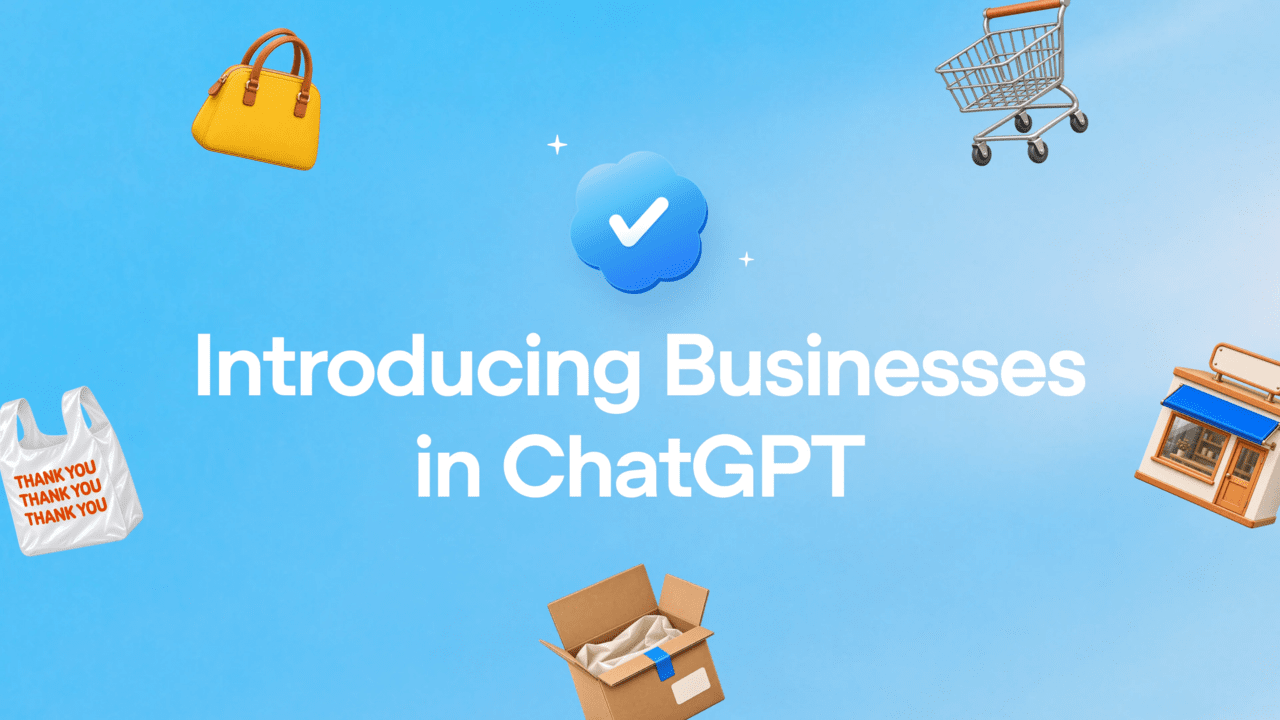
Now in beta: Businesses in ChatGPT.
Claim your business, manage your information, and get insights on how people engage with you.
Eligible businesses can also build a Business Agent to answer customers’ questions and help them explore what you offer.https://t.co/N2GEZX0mFT pic.twitter.com/lYj2Z48fhQ
— OpenAI (@OpenAI) November 10, 2026
This move is seen as an attempt to make ChatGPT a new search and distribution touchpoint where businesses and consumers meet. Just as Google has connected search users with businesses through business profiles, OpenAI is building an environment in which businesses can directly manage their information and communicate with customers within ChatGPT.
OpenAI previously pursued an e-commerce feature that allowed users to purchase products directly within ChatGPT, but it discontinued the related service after failing to achieve the expected results. This time, it has changed its approach to support product discovery and comparison, customer consultations, and visits to business websites rather than payments within ChatGPT.
OpenAI said, “As people discover products through AI, compare options, and make purchase decisions, ChatGPT is becoming a platform that connects people and businesses.” The company plans to expand the service to more countries and industries and add tools that address complex business needs.
Reporter Park Chan cpark@aitimes.com