Qwen Office 2.0 released, bringing the first Team Agent supporting collaboration between multiple people and Agents
On November 9, Qwen Office released version 2.0
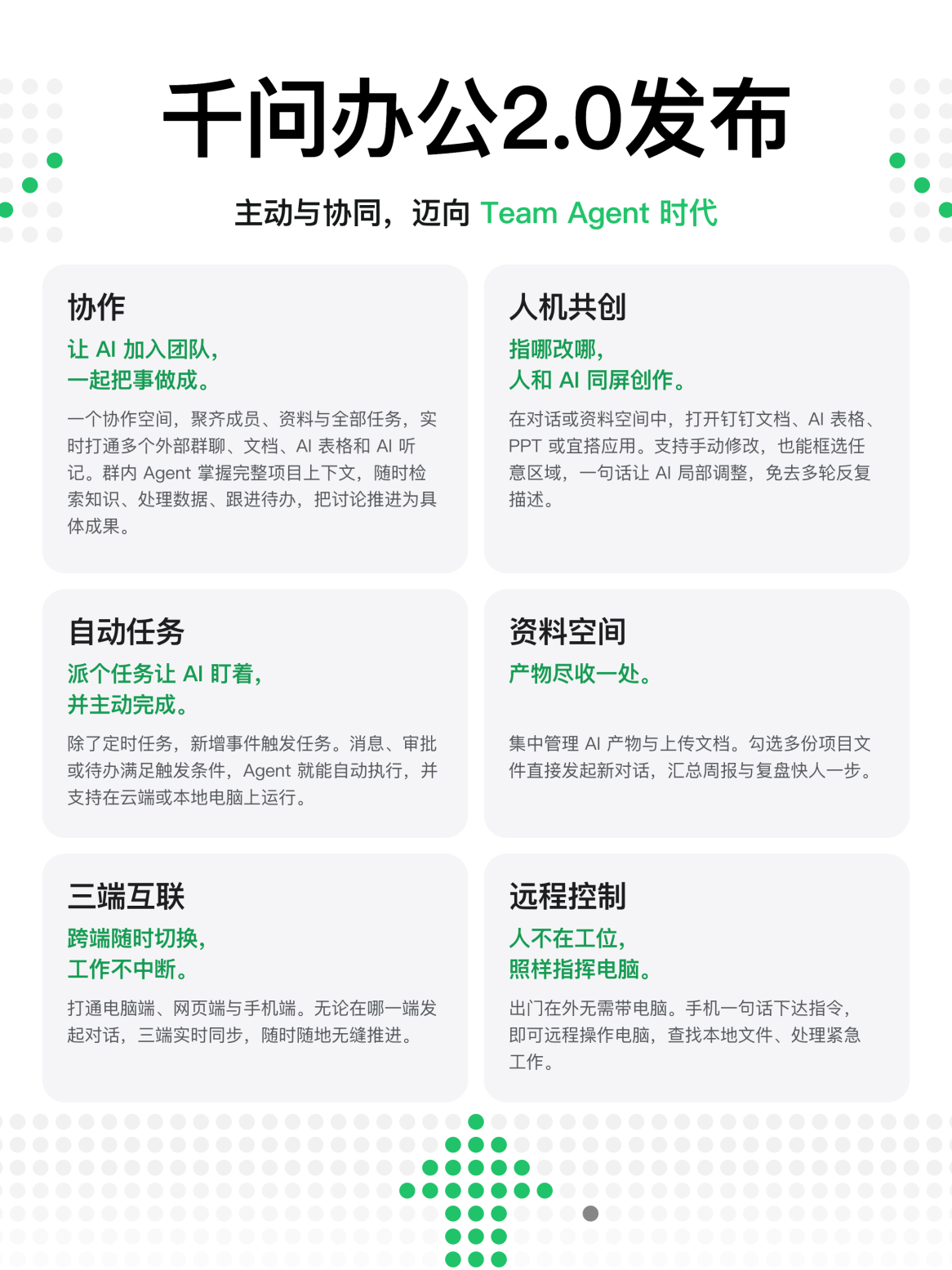
On November 9, Qwen Office released version 2.0, its largest upgrade since launching three months earlier. The version introduced the industry's first feature supporting collaboration between multiple people and Agents, “Collaboration,” while launching core capabilities including “Human-AI Co-Creation,” “Information Space,” “Automated Tasks,” and “Three-Device Connectivity,” allowing Agents to move from serving individuals to serving teams and organizations. At present, all features are fully available in the Qwen Office client.
In an official blog post published on the same day, “Qwen Office 2.0: Proactivity and Collaboration, Moving into the Era of Team Agents,” Qwen Office noted that mainstream office Agents still primarily serve individuals, and the way teams collaborate has not changed. The next generation of Agents needs to step into real-world team collaboration.
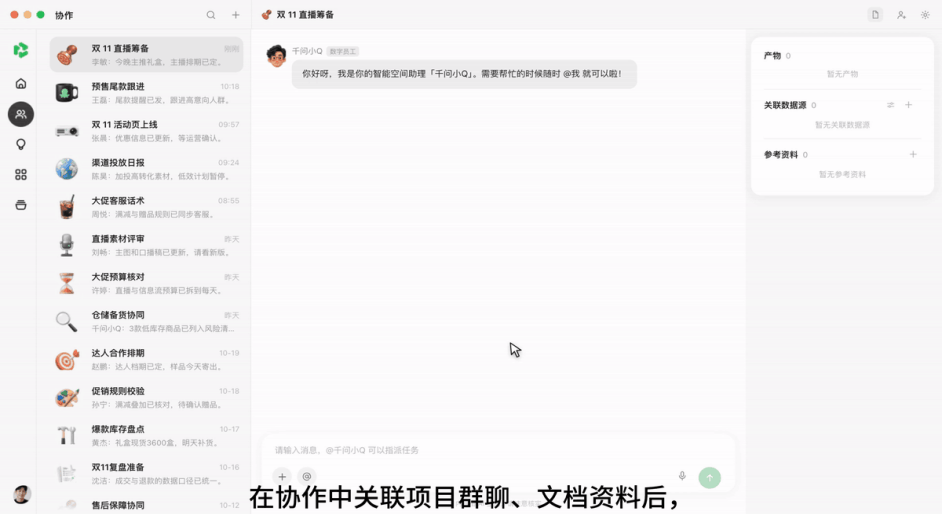
The “Collaboration” feature introduced by Qwen Office is the first to bring Agents into work groups. Users can create a collaborative workspace where a team and digital employees work together. Real work often takes place in group chats within office software, and information about a complex project may be scattered across multiple group chats and meeting notes, forcing members to manually transfer and consolidate information. Now, digital employees can connect in real time to multiple information sources within the collaborative workspace, including DingTalk group chats, documents, AI spreadsheets, and AI meeting notes, support multiple conversations in parallel, and manage and assign tasks. When members assign tasks in the collaborative workspace, digital employees can use the workspace context to organize progress, summarize consensus, create to-dos, and follow up on them.
According to reports, the Intime Department Store coupon operations team significantly improved its efficiency by using this feature. Previously, five operations staff on the team had to collect coupon submission information one by one from more than 60 store group chats, verify it, and then enter it back into a spreadsheet. Now, the team links these store groups and an AI spreadsheet to the same collaborative workspace. Their existing communication methods remain unchanged, while the Agent can aggregate information across groups and automatically update the spreadsheet, significantly reducing the operations team’s workload.
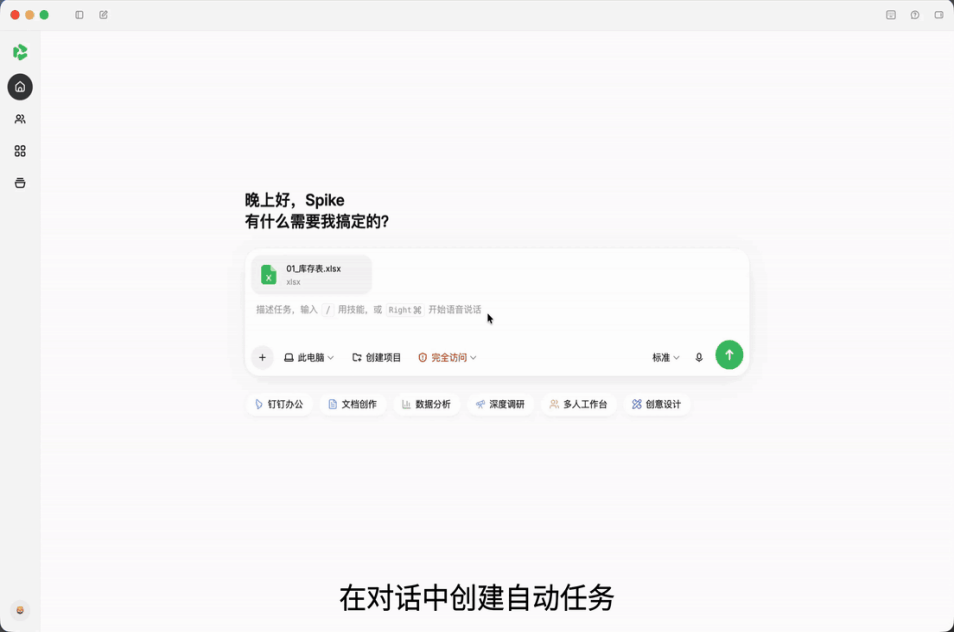
The “Automated Tasks” feature launched by Qwen Office is the first to upgrade Agents from passively responding to proactively doing work for users. Qwen Office’s official blog noted that the next generation of enterprise Agents needs the ability to sense business activity and drive work proactively, rather than wait for someone to start them. With “Automated Tasks,” users can subscribe to events and configure rules; when the conditions are met, the Agent automatically begins processing. Currently, the feature initially supports trigger scenarios such as messages from designated people, messages that @mention the user in designated groups, and approval tasks.
Take offline store management as an example. A regional manager has to monitor multiple stores at once, and stock-out feedback from different stores can easily be buried by large volumes of group messages. Now, after the regional manager uses “Automated Tasks” to set the trigger condition to “If someone in the group @mentions me about a stockout, read the inventory sheet and initiate a stock transfer request,” whenever a store employee sends stock-out-related information, Qwen Office can read inventory based on the group-chat context and automatically enter the stock transfer information into the spreadsheet, so the regional manager no longer has to monitor the group constantly.
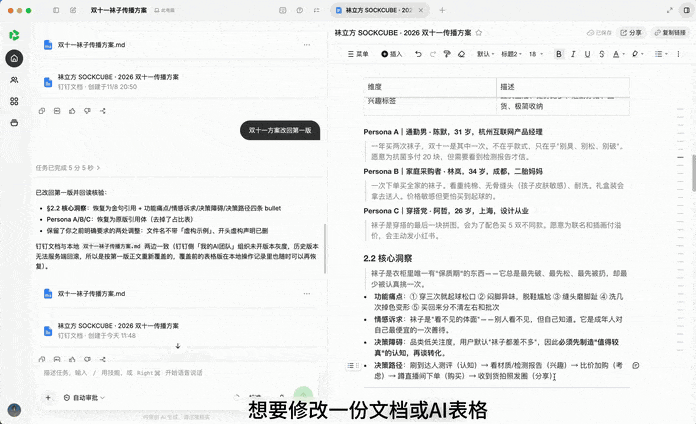
Qwen Office also introduced “Human-AI Co-Creation,” connecting conversations, content previews, and output editing. With this capability, users can view a document preview while making revision requests in the chat window, without having to review and revise across different applications. They can also directly select paragraphs, cells, slides, or regions of an application, mark multiple comments, and submit them all at once, and the AI can directly modify the original document according to the revision comments. For online documents, AI spreadsheets, and Yida applications, this feature also supports simultaneous online co-creation by multiple people and multiple Agents.
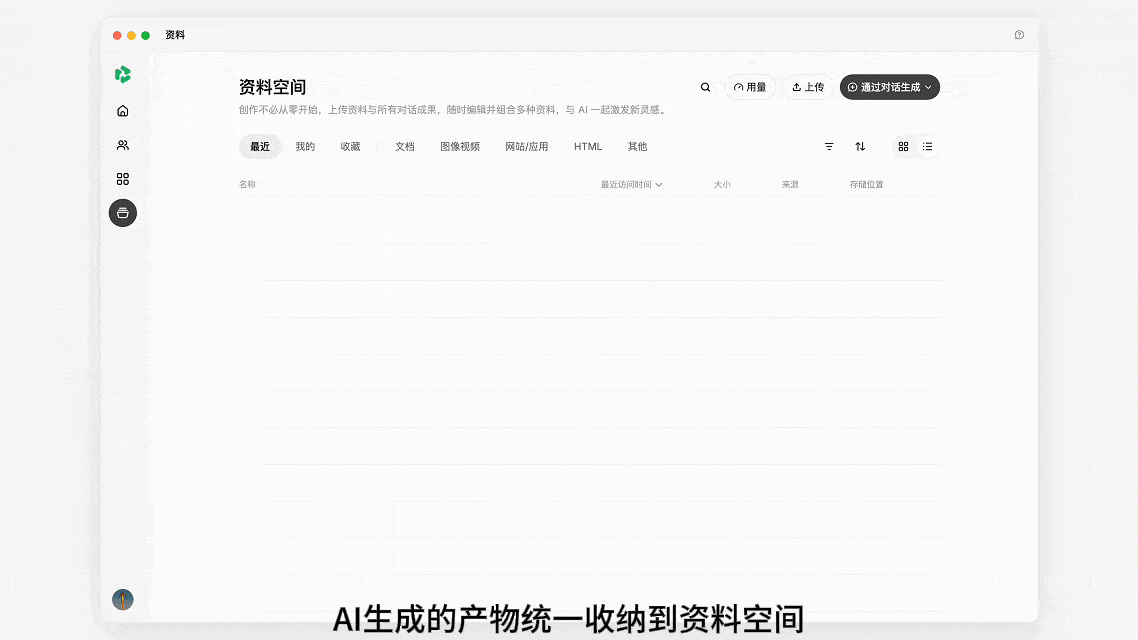
The newly launched “Materials Space” can store AI-generated and user-uploaded images, documents, spreadsheets, PPTs, webpages, applications, and local files, while supporting operations such as viewing, searching, and sharing. Users can select a single file or multiple files to directly start a new conversation or continue revising them through “human-AI co-creation.” For example, by selecting multiple industry research materials, users can directly generate a market planning proposal.
In addition, Qwen Office 2.0 further expanded users’ use cases by supporting real-time synchronization of tasks, conversations, and outputs across mobile phones, computers, and the web. Tasks run in the cloud and continue even after the computer is shut down. Once authorized, users can remotely operate their computers via their phones even after leaving their desks.
As the industry’s first enterprise-grade Agent, Qwen Office had previously established initial integration with IM software such as DingTalk, Feishu, and WeCom. With the atomic capabilities of IM software, native Office, and SaaS software integrated into the Agent client, Qwen Office has evolved into an enterprise-grade Team Agent, leading a new paradigm of human-machine collaboration.
This article is provided by Qwen and reprinted by QbitAI with authorization. All views belong to the original author.

