AI Short-Drama Production Barriers Keep Dropping! Hands-On Test of Jimeng Short Drama Studio: An End-to-End Workflow for Scriptwriting, Storyboarding, and Previsualization; the Partner Program Offers Long-Term Support
Seedance 2.5 costs as little as RMB 0.15 per second
Tingyu, reporting from Aofeisi
QbitAI | Official WeChat Account: QbitAI
Has anyone else like me been binge-watching “The Accident” lately? I’m seriously hooked!
Lorna and Keaton are dating, and I’m more anxious about it than either of them……
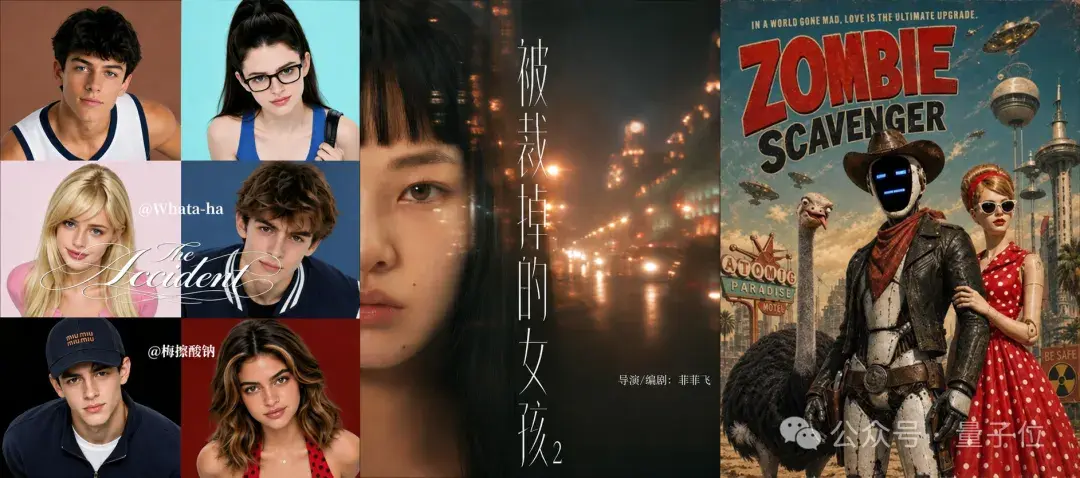
And lately, there really have been plenty of premium short dramas:
One moment I was watching Fang Taozi brave the modeling world in “The Girl Who Got Cut,” and the next I clicked on the sci-fi short “Zombie Cleaner” and was already battling zombies alongside a robot cowboy~
As AI video models become increasingly capable, more creators are also developing the urge to tell longer stories.
But making serialized series still comes with persistent pain points such as consistency and asset management, and creators’ energy can easily be consumed by procedural work beyond the creative process.
With these issues in mind, I also tried making a short drama set in an American high school:
This little American high school skit is what I put together with Jimeng Short Drama Studio.
The biggest thing that sets Jimeng Short Drama Studio apart is that it gives creators who want to make serialized series an alternative to working on the canvas.
It links the script, asset library, and storyboarding stages within a single project. You can start with a one-sentence idea, or bring in a novel or existing script and continue from there.
You may have heard the recent rumor that Jimeng and Little Skylark were going to merge.
According to Jimeng, what actually happened was that Jimeng integrated Little Skylark’s short-drama agent capabilities; both are under CapCut.
This integration helps expand Jimeng’s tool capabilities for different creative scenarios; at its core, the goal is still to better meet creators’ practical needs.
So, for creating a story with consistent characters, emotional shifts, and comedic timing, how much of the work can Jimeng help creators complete?
Let’s put it to the test!
How an American High School Concept Becomes a Shootable Script
My first message to Jimeng was pretty casual:
“I want to make a popular American high school short drama, something like The Accident.”
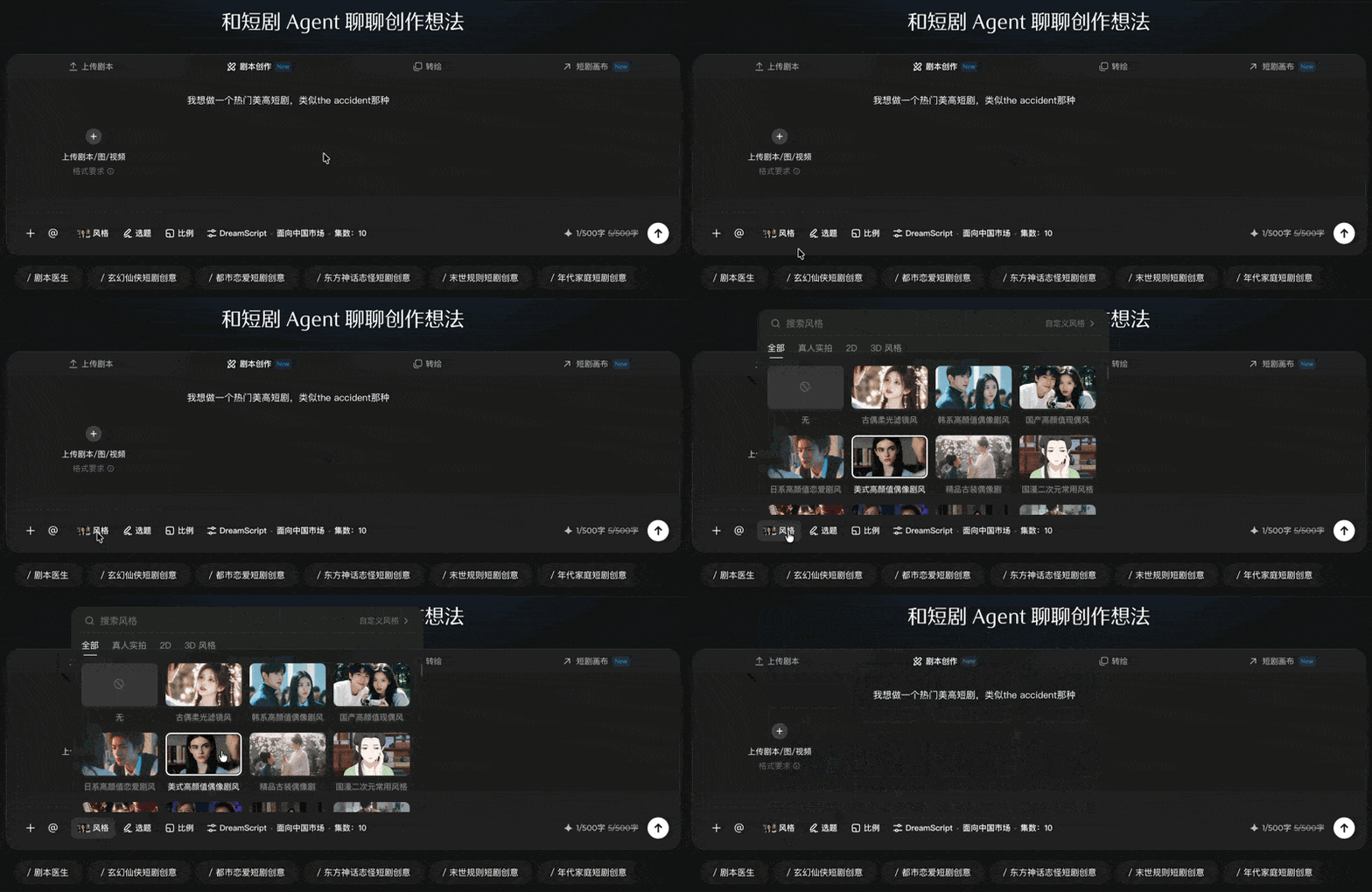
The Short Drama Assistant first searched for some inspiration and came back with three options.
When I opened them, wow: a student falling from a rooftop, a laboratory on fire, and an eyewitness locked in a battle of wits with the killer.
Students at this high school have it pretty tough……
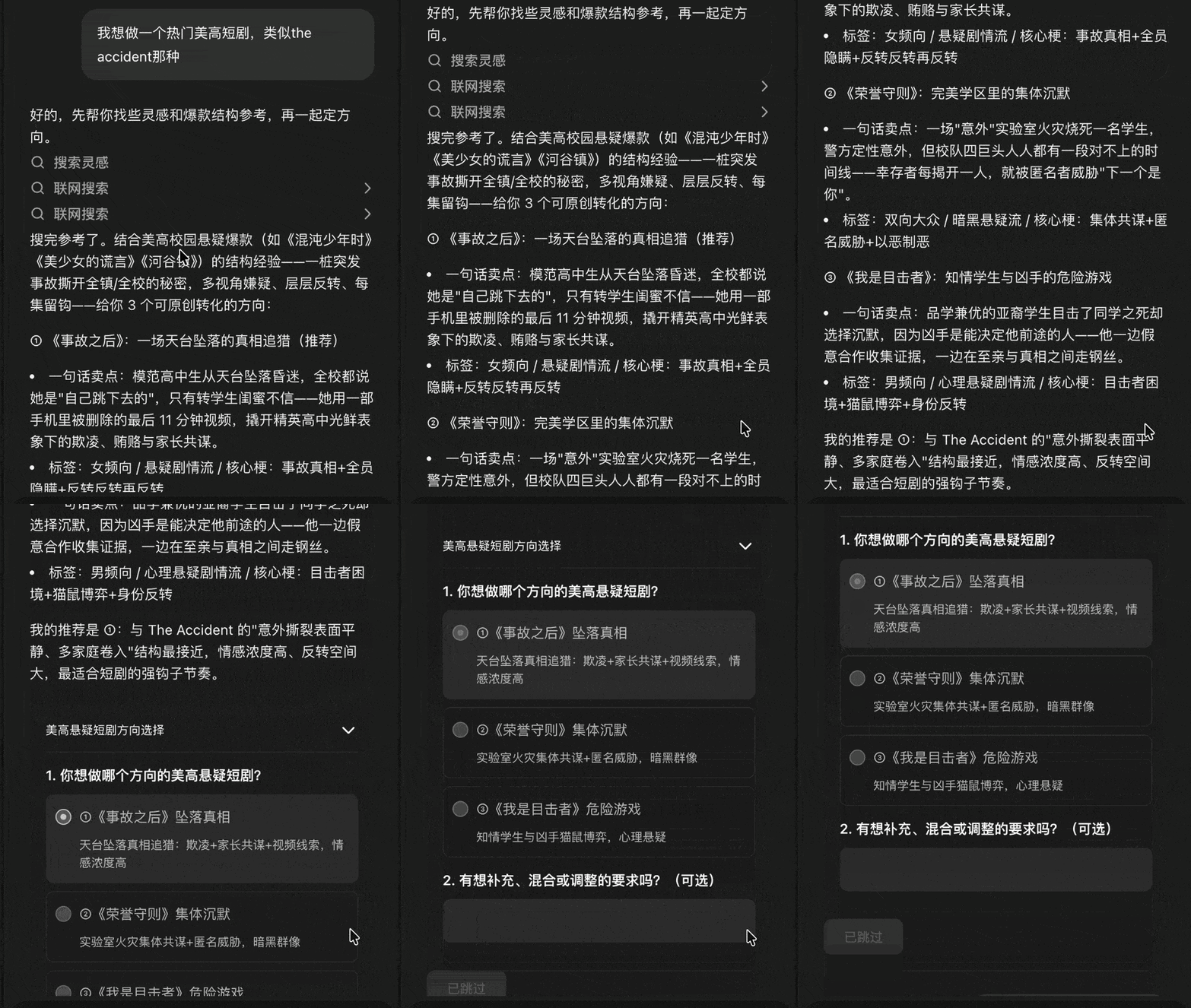
I quickly added, “It doesn’t have to be suspense; it can be a light comedy.”
This time, it felt right.
Out of the three new concepts, I immediately picked “Exchange Student Arrives.”
A Chinese exchange student named Lin Xiao arrives at a high school in California. He takes the stage to introduce himself, and what he pulls out is actually a semester goals chart—and he even plans to set a “weekly improvement KPI” for the entire class.
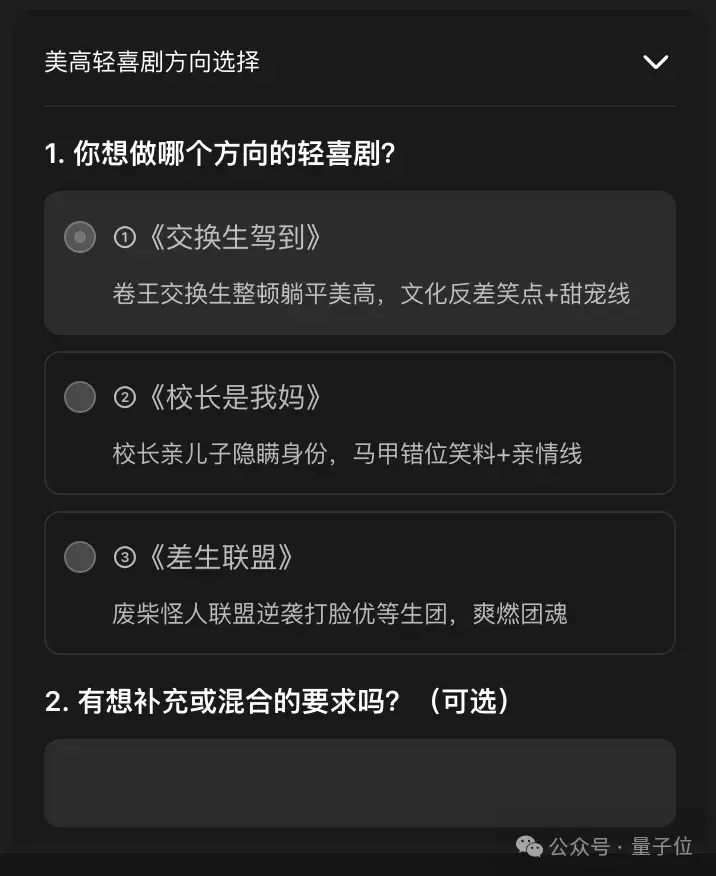
This step uses the screenplay model DreamScript. After the direction was selected, Dreamina first laid out the story setup:
It gave Lin Xiao a deskmate, Jack, an academically struggling student who had received an F in math, as well as Chloe, the arrogant and domineering cheerleader who often went against him.
It then generated episode outlines for 10 episodes and the full scripts for the first three episodes, with each episode outlining the specific story and the suspenseful ending.
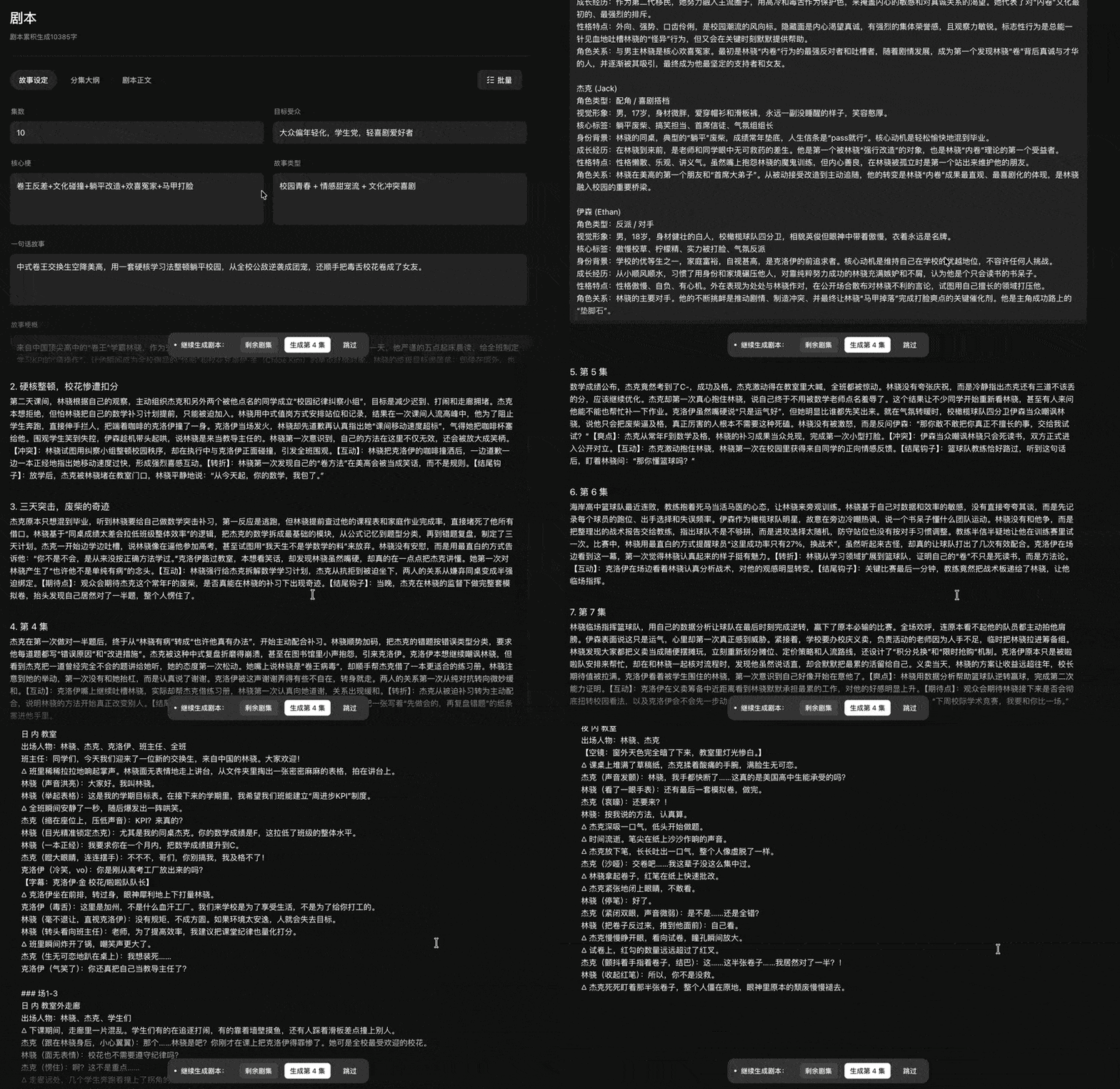
Honestly, this screenplay is incredibly detailed. Not only the dialogue, but every character's actions and expressions are clearly marked out.
However, when I reached Episode 2, I noticed a small bug: the title clearly said “The School Beauty Has Her Points Deduced,” but no point deduction appeared in the script.
I brought this issue up with the short-drama assistant. It first proposed a fix, and after I confirmed it, it rewrote the script accordingly.
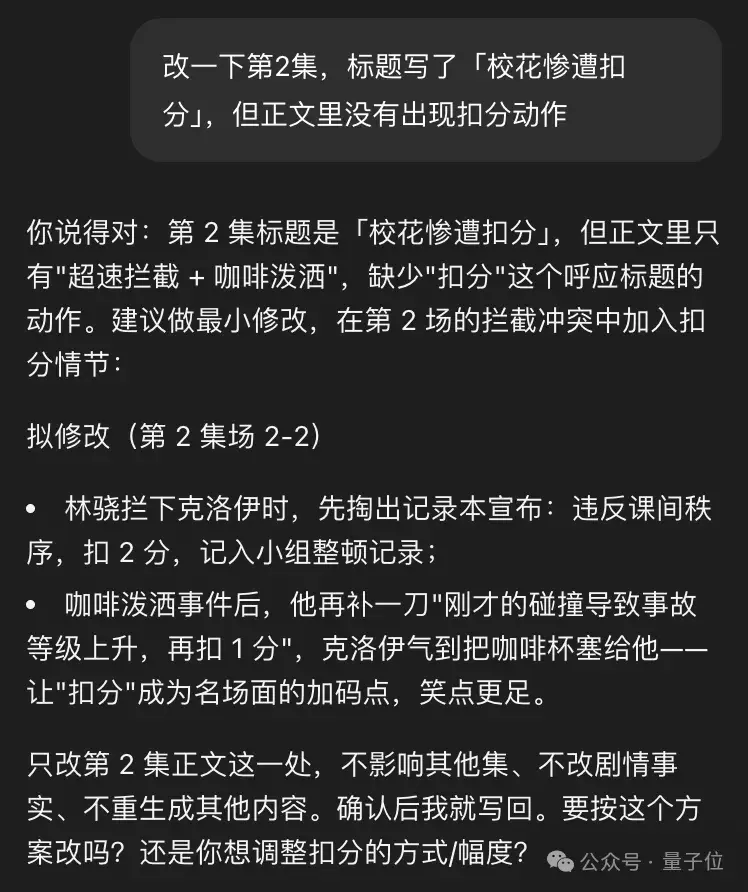
Now that the screenplay is all set, I'm ready to start producing the first three short-drama episodes directly.
After opening the Production Assets Library, I found that the seven characters and three locations needed for the first three episodes had already been listed according to the screenplay.
Besides the three main characters—Lin Xiao, Jack, and Chloe—even Students A and B, who were brought in to stand guard, had their own character cards.
Clicking on any character card or location card revealed a completed prompt, and a single click was all it took to generate an image separately.
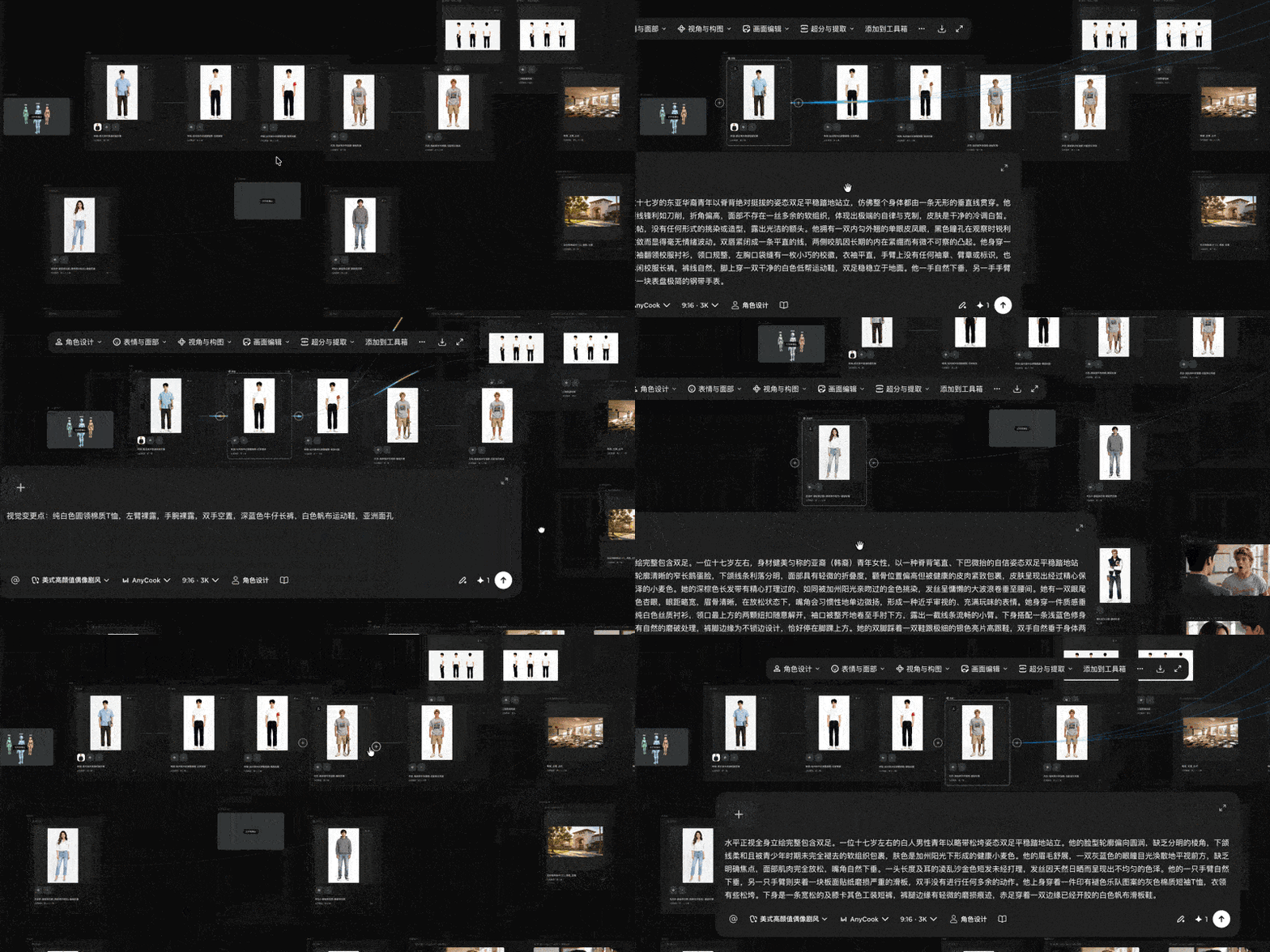
What's even more convenient is that you can generate entire groups as well!
It took me only about 10 minutes to generate the finalized character designs and campus scene images.
Clicking Next took me straight to “Storyboard Script Generation.”
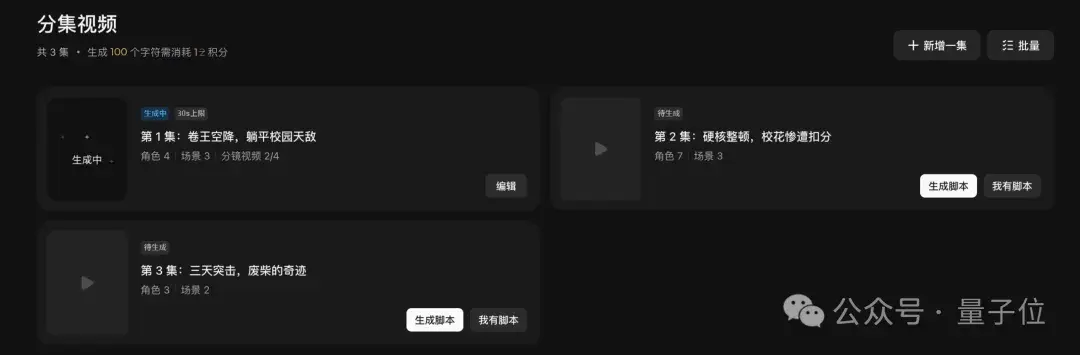
The first three episodes had already been laid out. I could choose to have AI generate the storyboards automatically or open a blank storyboard and write them myself.
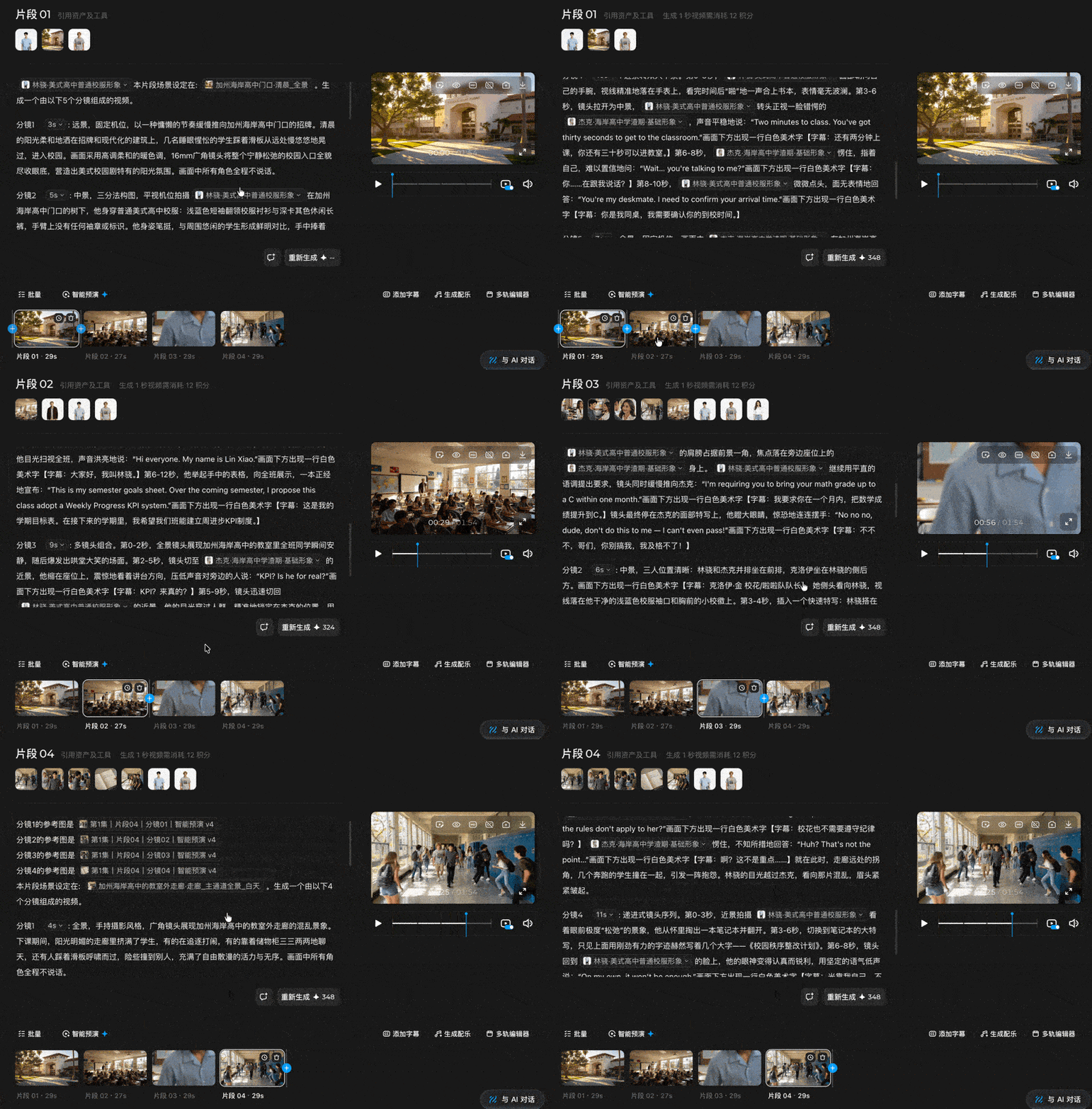
I chose the first option and started with Episode 1.
This is the result of directly generating the first clip, which took about four minutes.
Here it is. I think the overall quality is pretty high:
However, I wanted to change how the final shot at the school gate was filmed.
The original version used a wide shot for Jack's line, “Dude, you're so weird,” which didn't emphasize his emotions enough.
I wanted to start with a close-up of Jack during this line, then cut to his shocked reaction when he heard the class bell, with bilingual subtitles added.
I directly entered this request into the storyboard assistant on the right.
After I submitted it, the assistant first revised the storyboard's textual description, clearly specifying that Jack's line should be paired with a frontal close-up.
It then regenerated the video clip:
Dreamina completely reshot the segment according to my instructions. It not only gave Jack a frontal close-up, but also perfectly captured his shock at Lin Xiao, the strange new transfer student.
I would say the emotional tension was maxed out!
Preview first, then start filming—keep the camera work and the cost of trial and error under control
I also discovered an unconventional trick in the Dreamina Short Drama Studio for saving credits:
It was “Smart Previsualization” plus a 480p test generation.
You can use the Short Drama Director Board and Camera Movement Library to validate a scene first, then officially generate it once you're satisfied.
For example, Clip 03 from this episode looked like this in the original version:
There were a few bugs in this segment: while Chloe was talking to Lin Xiao, she inexplicably glanced at his cuff, making that shot meaningless; and while several main characters were talking, the classroom behind them was empty, before the scene abruptly cut to the entire class bursting into laughter, which felt very jarring.
I tossed these questions to the Storyboard Assistant and told it to do a “Smart Previsualization”:
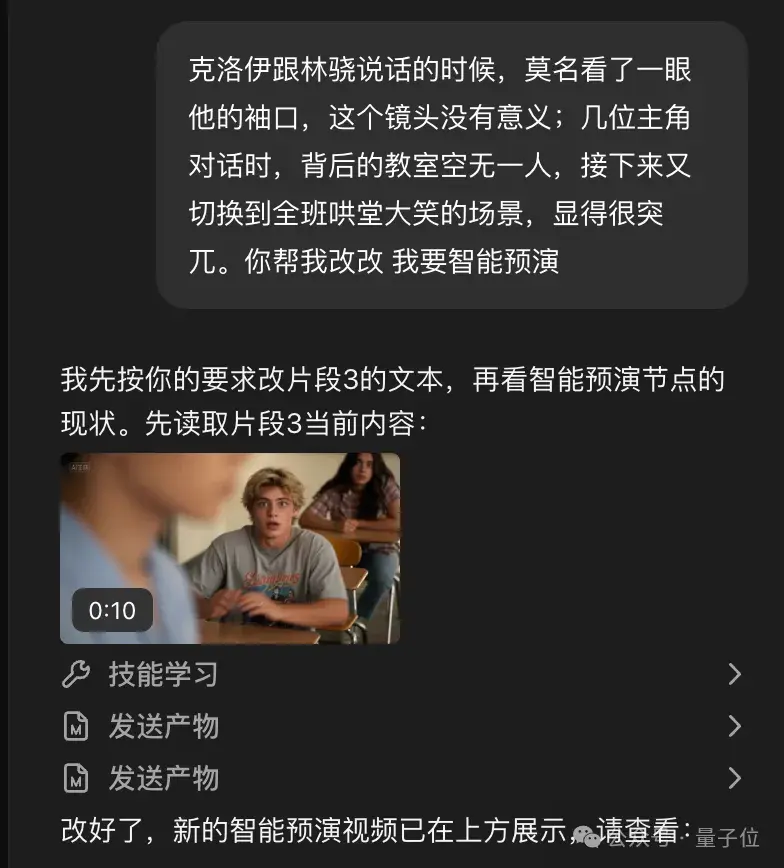
It updated a new version of the reference images and generated an 8-second previz video.
You can roughly see the positions of the lead actors in each scene and the overall progression of the plot:
Interestingly, it can also use the 3D Director Console to turn the storyboards into a 3D scene you can explore freely.
The classroom’s spatial layout, the three characters’ blocking, and the camera angles can all be arranged in 3D and viewed from different angles:
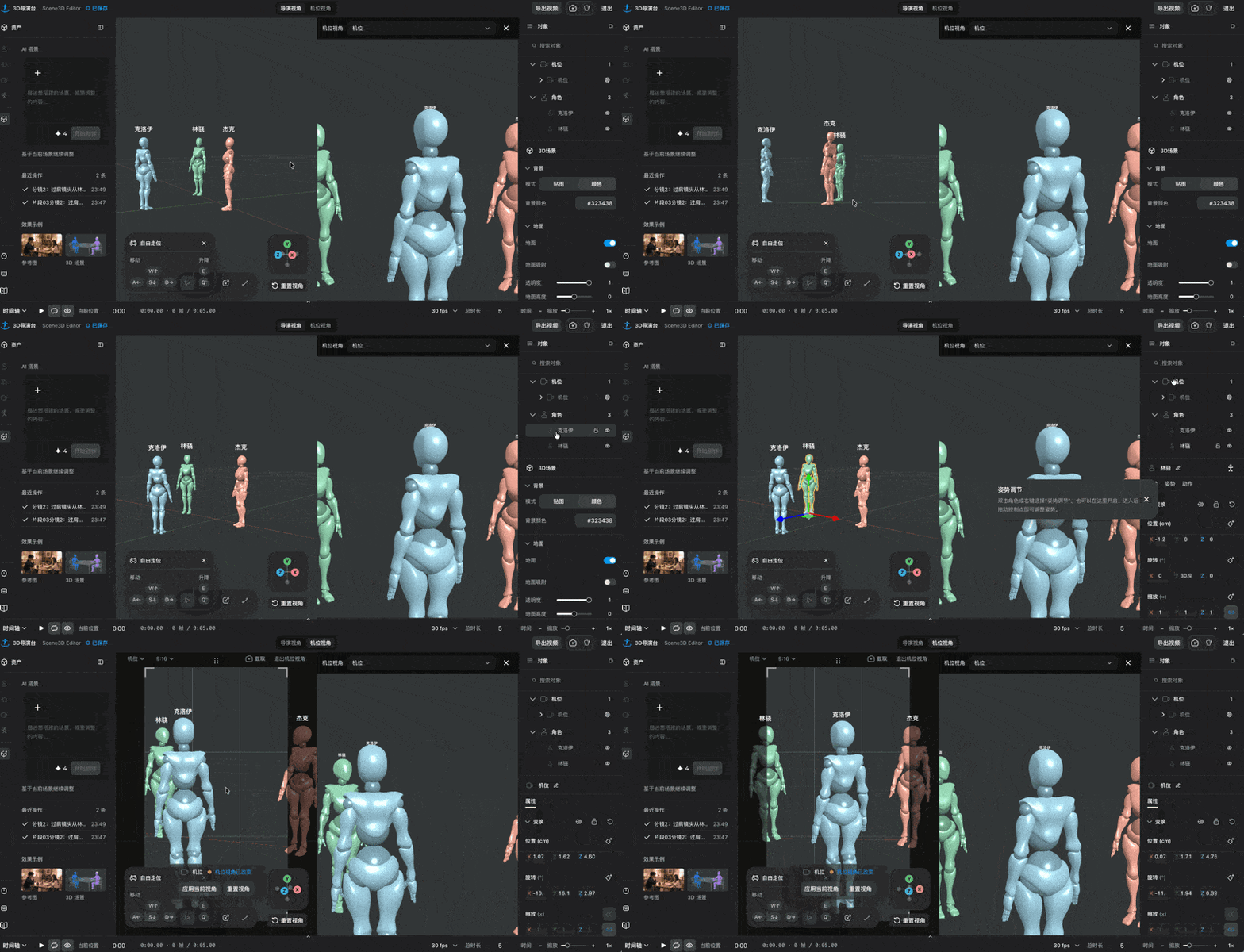
Its value lies in validating spatial and positional relationships. For example, if I ask for Protagonist A in the front row and B and C side by side diagonally behind, I can tell from the scene whether the character positions make sense, whether their eyelines are correct, and whether the camera setup works.
Once you are satisfied, you can generate a 480p sample first, which also saves some credits.
After several rounds of revisions, this is the regenerated sample:
This time, the classroom background finally looked normal, and the lead actors strictly followed the positions established in the earlier previz as they delivered their dialogue.
If there are still parts you aren’t happy with, you can also use the “Partial Reshoot” feature to capture only the shot you want to modify and directly describe your requirements.
For example, here I asked it to remove the shot of Chloe blinking repeatedly:
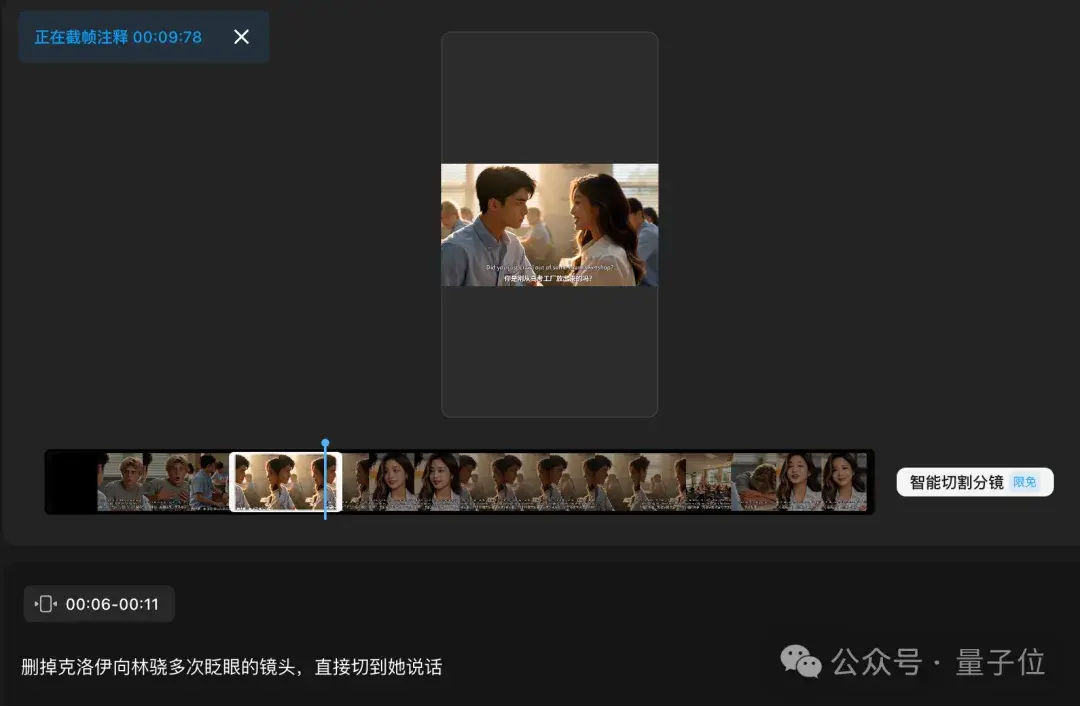
Soon, Jimeng Short Drama Studio delivered the revised result:
This way, you can make precise edits without changing the characters’ relative positions, offering more control than regenerating the entire sequence~
Let more creators keep filming their stories
After completing this full short drama, I deeply realized:
Making short dramas is actually a technical craft.
Contrary to what you might imagine, AI short dramas are not about rapidly mass-producing low-quality, instant-gratification content; they are more like light, low-burden narrative content designed for continuous serialization.
This time, using Jimeng Short Drama Studio also allowed me to experience the process of turning “a single creative spark into a complete short drama.”
And do you think all the short dramas made by Jimeng rely on instant-gratification formulas?
Not at all!
There are also slice-of-life comedies, emotional stories, urban workplace dramas, and more—a rich and diverse range of subjects.
This gives users tremendous creative space, well satisfying creators’ need to produce serialized runs of episodes, and helping them manage their assets project by project.
If you bring friends in to film with you, there is also a team version: you can share assets and allocate credits per person. Businesses with established production workflows can also integrate the generation capabilities through an API.
Once a production is finished, Jimeng also provides corresponding support.
Individual creators can apply for support for future work through Jimeng’s Creator Growth Program. For someone like me, who has finished one episode of an American high school skit and still wants to keep filming, credits are a real expense.
For a studio that needs to keep releasing content, there are two more things to worry about: what to make next, and how to get it seen by viewers once it is finished?
At the end of October, Jimeng launched the “Jimeng Short Drama Institutional Partner Program,” which studios, MCNs, and teams producing short dramas overseas could all apply to.
After being selected, a team can first test-produce with one month of Advanced Team membership, or tap into IP adaptation resources to find a script for its next production.
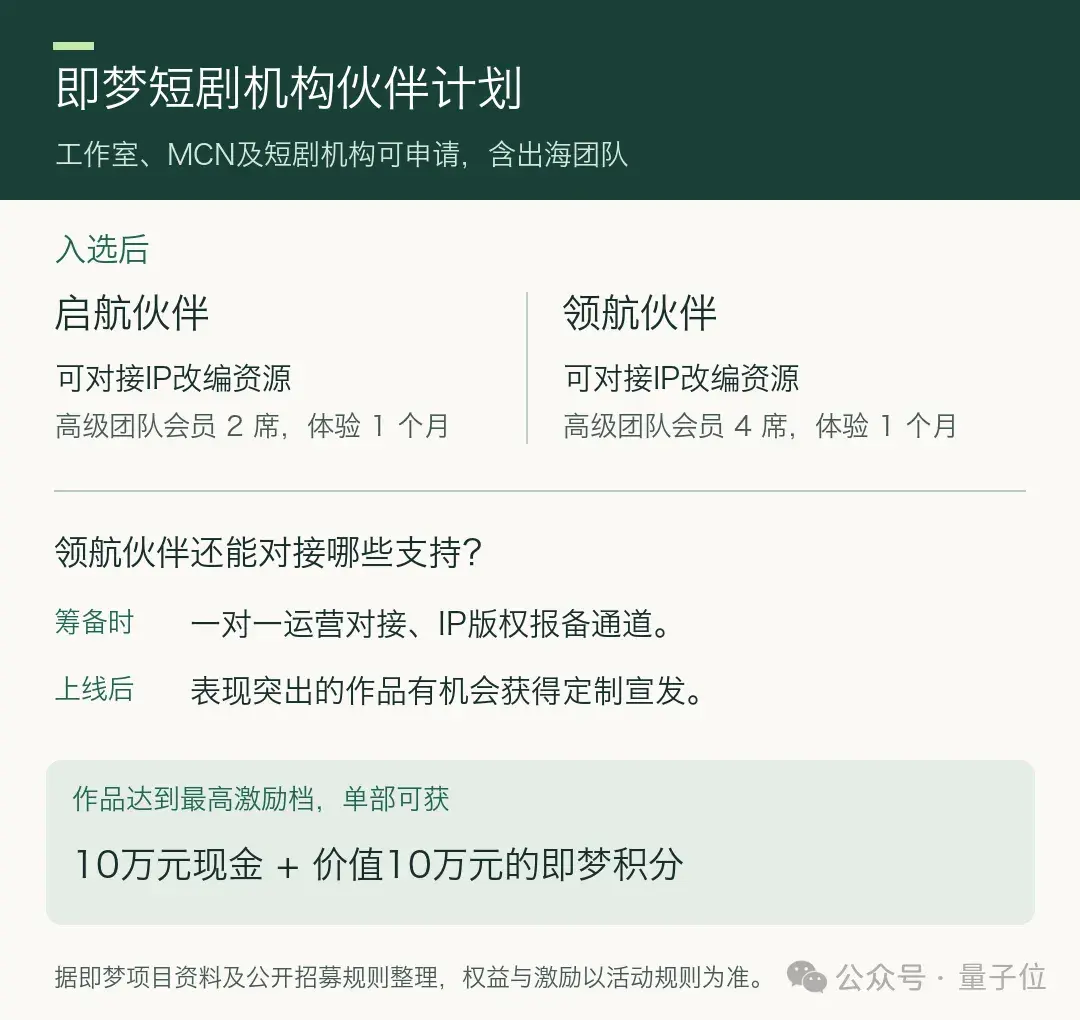
For example, teams selected as “Navigator Partners” can access IP from platforms such as Tomato Novel and Read a Story Every Day.
If you like a particular story, an operations specialist can discuss the topic with you, and there is a dedicated channel for handling copyright filings.
Once the series goes live, standout works may also qualify for tailored promotion and distribution support, working with you to decide which storyline to lead with and which channels to release it on.
The work’s viewership on major short-drama platforms at home and abroad has reached the highest reward tier. Each production can also earn RMB 100,000 in cash, plus Jimeng credits worth RMB 100,000.
For teams moving on to produce their next title, these credits can also be used to finalize new character looks, shoot camera tests, and produce sample footage.
Plus, with the Singles’ Day shopping festival underway, Jimeng Seedance 2.5 is offering maximum discounts!
Individual annual membership plans start at just 45% of the regular price, while team annual plans start at 42%. Using Seedance 2.5 with a reference video to generate 720P footage costs individuals as little as RMB 0.16 per second and teams as little as RMB 0.15 per second.
That’s an all-time low—when have you ever seen Seedance be so affordable?…
If you’re interested, don’t miss out!
—End—
@QbitAI · Tracking the latest trends in AI technology and products
If this resonates with you, be sure to give us a like, follow, and share! վ’ᴗ’ ի ❤