Zhidx (WeChat official account: zhidxcom)
Author | Sun Xiaowen
Editor | Cheng Qian
Zhidx reported on November 6 that Meta began opening its personal AI agent Muse’sreal-time voice and animated avatarfeatures to users in the United States early this morning. Users can create their own animated avatars for Muse and converse with them directly. The avatar changes its expressions and movements as the conversation progresses, much like being on a “video call.”
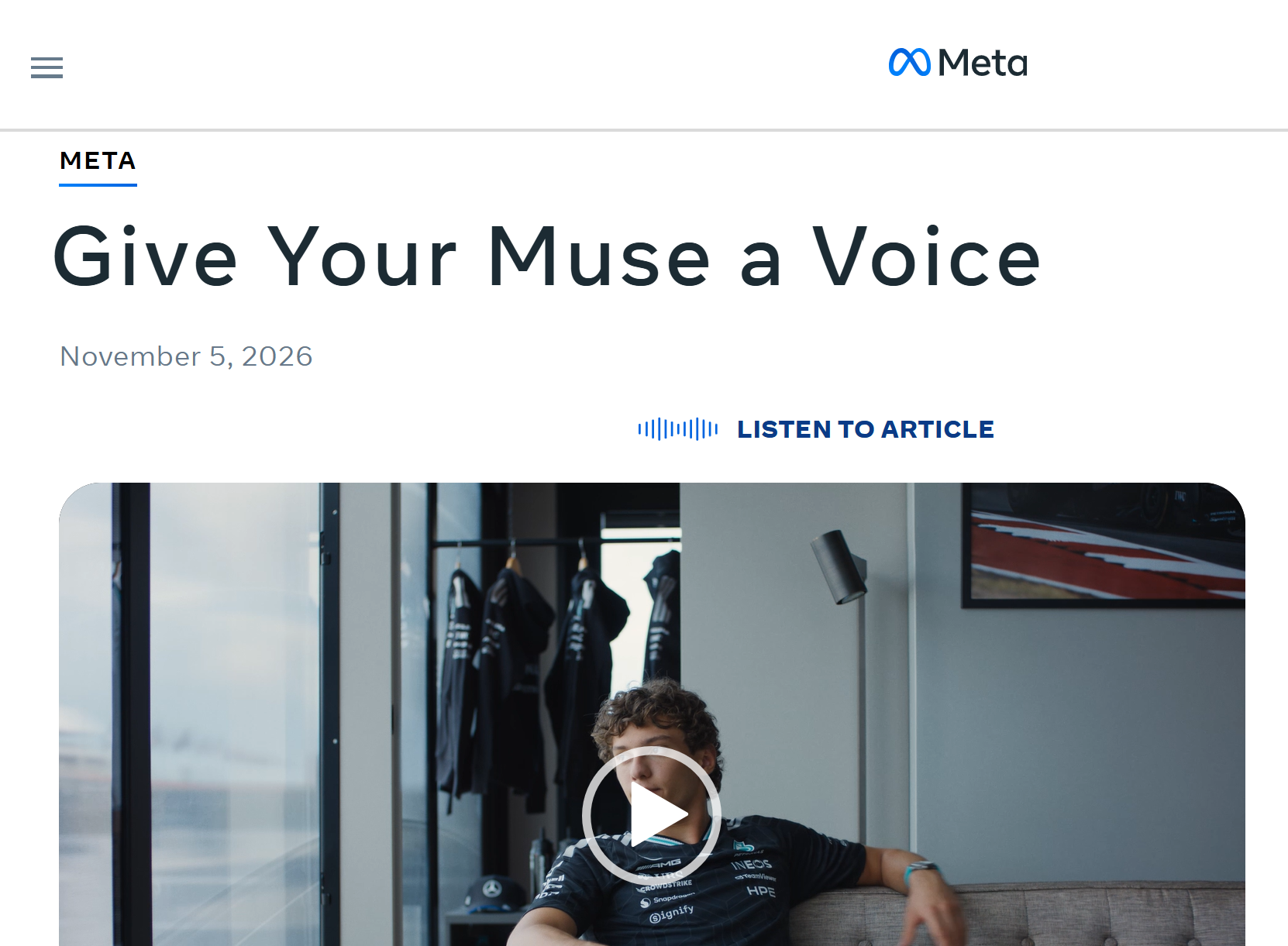
This update supports a variety of use cases: users can use Muse for mock interviews, cooking, trip planning, and other scenarios, discussing ideas and assigning tasks through real-time conversations. Users can also interrupt at any time and add requirements during the conversation.
Meta Chief AI Officer Wang Tao (Alexandr Wang) was also the first to have hisMuse play the role of his boss. His Muse is Euler, a white dog wearing a green coat. He set up a scenario in which, because he had posted too many memes on X, his boss called him in for a talk, and asked Euler to rehearse with him.
When Wang Tao explained that he was using humor to promote Muse, the dog continued asking questions: Did it take up working time? Would the company be seen as endorsing certain content? The dog’s final advice was to keep Muse fun, but to make clear that it was a personal expression, add a disclaimer, and avoid using up working time.
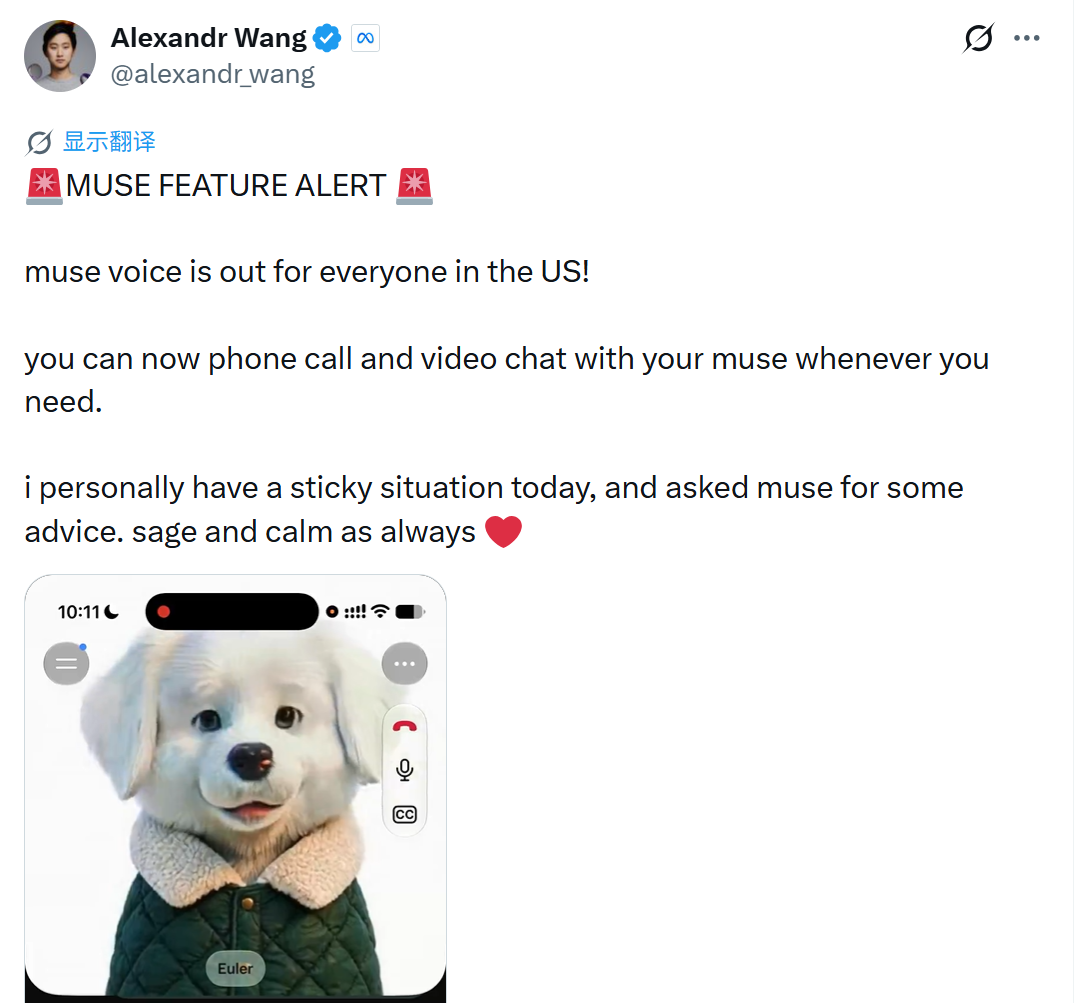
▲Wang Tao has the Muse dog play the role of his boss and rehearses how to address concerns arising from posting memes (video source: X)
Meta CEO Mark Zuckerbergalso posted a meme video on X: an open-mouthed duck snuggling in front of Muse, with only one line of text: “Me after today,” seemingly joking that he has already been unable to stop chatting with Muse.
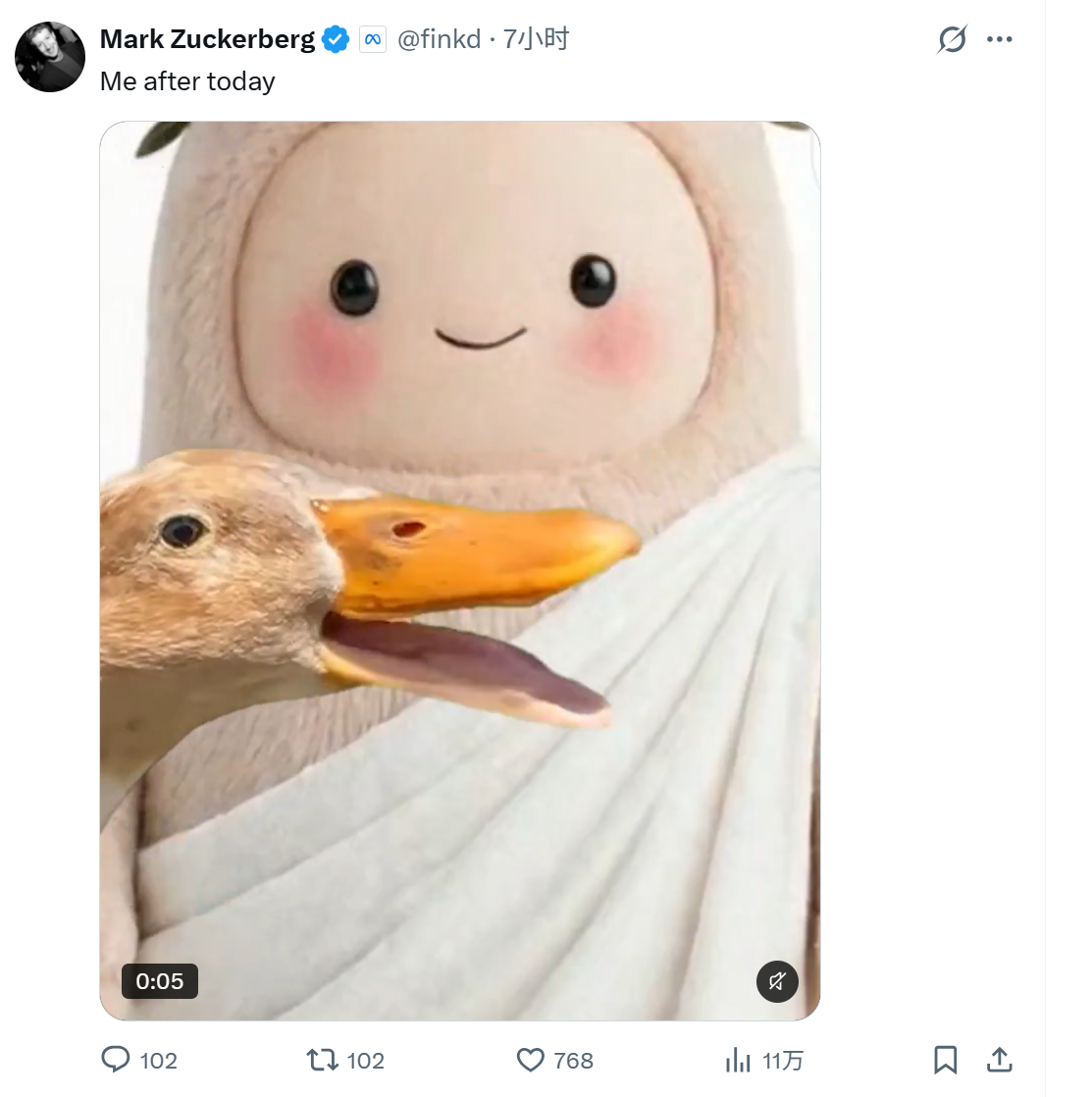
▲Zuckerberg posts a Muse meme video with the caption “Me after today” (image source: X)
Based on the experiences users have shared, Muse’sfun and interactivityhave received considerable praise, and its avatar-voice synchronization has also been considered natural. However, some users have reported that it repeats content after being interrupted or interjects before the user has finished speaking.
I. Cartoon avatars bring a new twist to “video calls”: practicing interviews and discussing recipes
This feature is available onmobile, the web, and Macclients. Users can click the phone icon in the upper-right corner of the interface to begin a conversation. They can use voice alone, display the virtual avatar alongside the conversation, or switch to full-screen mode. Users can also choose different styles fromhundreds of voices and interrupt Muse while it is speaking.
What new possibilities can the “video call” offer? Meta has providedtwo official examples.
The first example is amock-interview scenario. In the example, the user has Muse play the role of a hiring manager and asks it to email the recruiter after the practice session to confirm the date.Wearing a cowboy hat, Muse begins by asking about the user's personal experience. After hearing the user describe her 10 years of sales experience, MBA degree, and experience founding a coffee business, it suggests that she start with her entrepreneurial story to highlight her ability to proactively take ownership of responsibilities (ownership).
▲Official demo: Muse plays the role of a hiring manager and provides feedback on the user's answers (video source: Meta)
Another example, meanwhile, moves the setting into a kitchen. The protagonist discusses what to eat with Muse. Muse successively suggests restaurants, offers recipes combining Italian and Mexican flavors, and shows ingredient products such as pasta and cheese. It then mentions that the user's friend Kristen Kish runs a restaurant nearby and asks whether to invite her over to cook together.
▲Official promotional video: discussing what to eat, recommending recipes and ingredients, and recommending a contact (video source: Meta)
II. Netizens Overseas Join in the Fun, Making Anime Characters Speak and Chatting with a Cartoon Girl
As soon as the “video call” feature went live, internet users abroad began flocking to have fun with it.
Some users put their favorite characters into real-time calls. One X user set Muse as Rem, a blue-haired anime character, and shared a screen recording of the call. In the video, the character appears in a circular avatar, with the mouth moving as the conversation progresses.
▲A screen recording of a Muse call shared by an X user, featuring a character named Rem (video source: X)
Another X user demonstrated a conversation with Donna, a red-haired cartoon character. He asked Donna to explain Muse's voice feature, then interrupted to ask which button should be pressed to turn it on. Donna replied, “You don't need to apologize,” and continued explaining how to enable it. The user said that even when interrupting midway,the conversation still felt natural.
▲An X user talks with Donna, interrupting and asking follow-up questions during the conversation (video source: X)
Other users also commented on how Muse handles ambient noise. A user on X wrote under Zuckerberg's announcement that Muse did not seem to mistake random background noise for itself repeating what the AI had just said. The user added that Muse has a wide range of voice options, and that the virtual avatar stays synchronized with the voice.
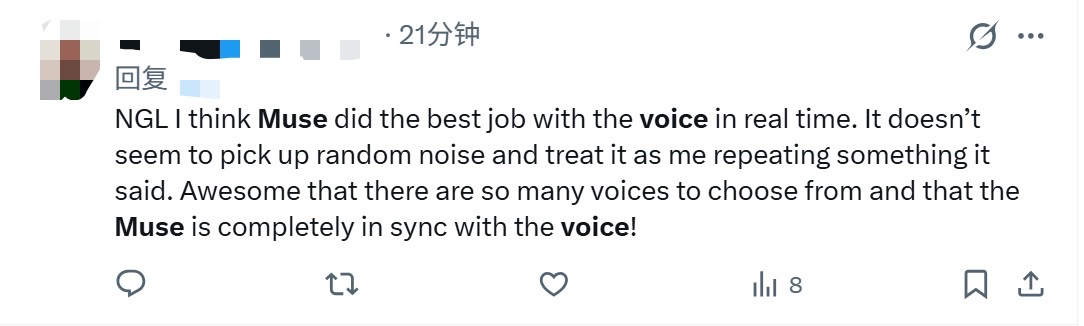
▲An X user's assessment of Muse's background-noise handling, voice options, and audio-visual synchronization (image source: X)
However, some users encountered problems during sustained conversations. One X user said that they had used the voice feature every day since activating it, sometimes for conversations lasting more than an hour. However, whenever Muse was interrupted midway through an answer, it would often repeat content and sometimes interrupt before the user had even finished speaking.
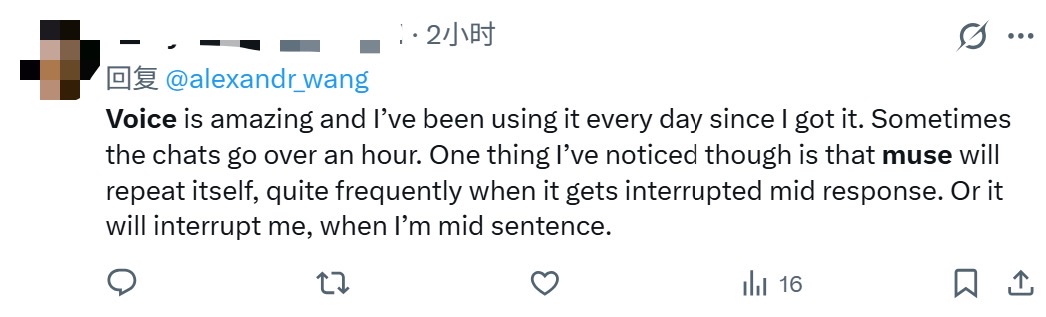
▲An X user reports that Muse repeats content after being interrupted and sometimes interjects midway through a conversation (image source: X)
III. Delivering on Its Connect Conference Promise, Muse Plans to Integrate with Hardware Devices
According to a technical blog Meta published during its September Connect conference, this real-time interaction is jointly powered by Muse Realtime Voice and Muse Realtime Avatar. The speech tokens generated by the former are used both to synthesize audio and to drive the latter in generating visuals, keeping lip movements and facial expressions synchronized with the speech. Generated videos also embed invisible watermarks to trace the source of the content.
Over the past two months, Meta has successively updated Muse's model and added interaction features, and plans to bring it to users' personal devices.
When it first launched this September, Muse was positioned as a personal AI agent, supporting iOS, Android, and the web. It also came equipped with an independent cloud virtual machine, enabling it to handle tasks such as email, shopping, and travel across apps.
At Meta Connect 2026 on September 24, Zuckerberg revealed that the team had trained a new real-time model that enables Muse to generate corresponding animations during conversations. He also held a live conversation with his own Muse onstage. Zuck's Muse was Agrippa, dressed in a white robe and wearing a laurel crown.
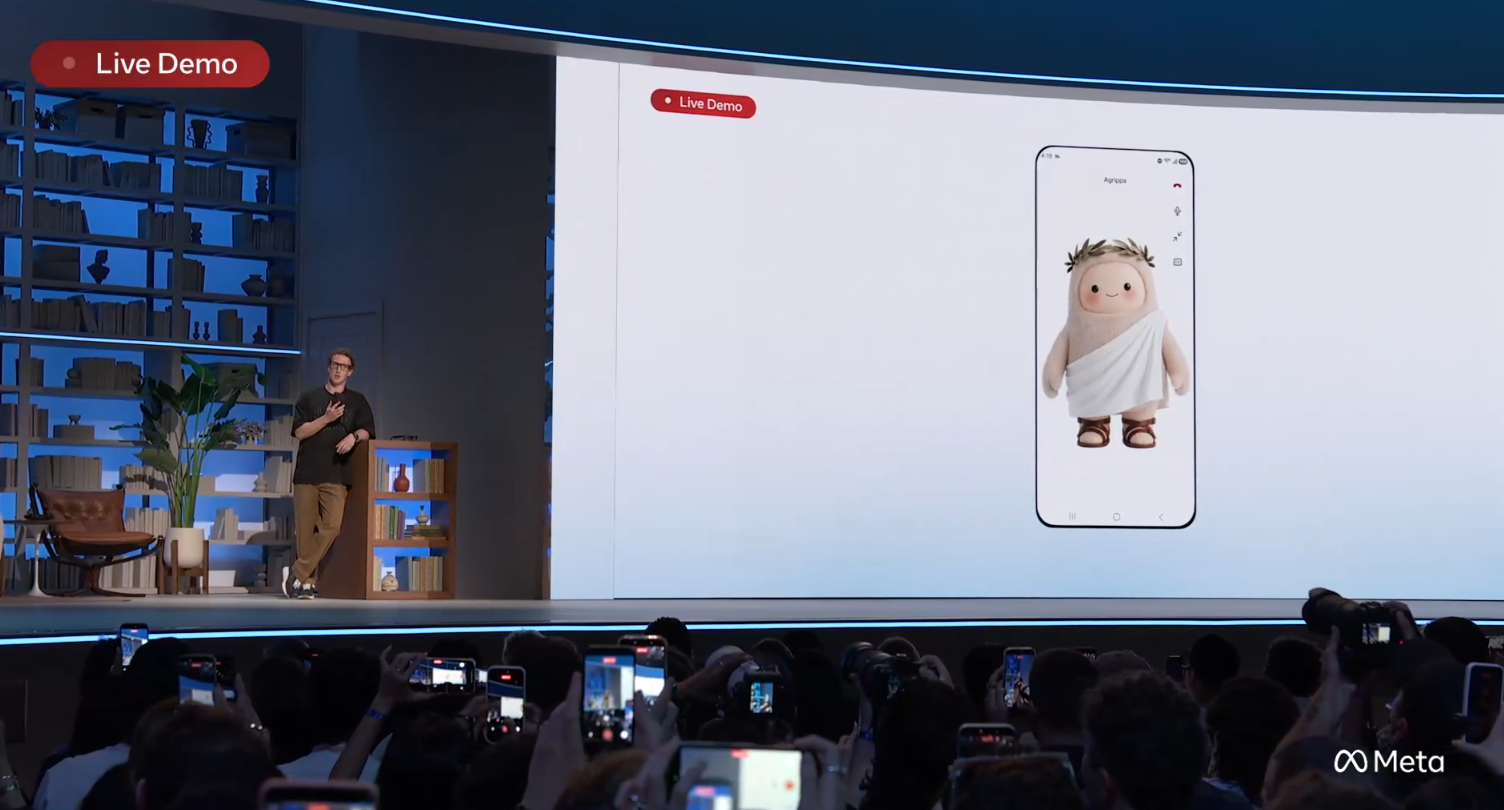
▲At the Connect conference on September 24, Zuckerberg speaks live with his own Muse—Agrippa (Image source: Meta)
Zuckerberg said at the conference that users can describe the voice style they want and adjust the speaking rate and accent. He frankly said that talking with Muse is both efficient and fun and cute.
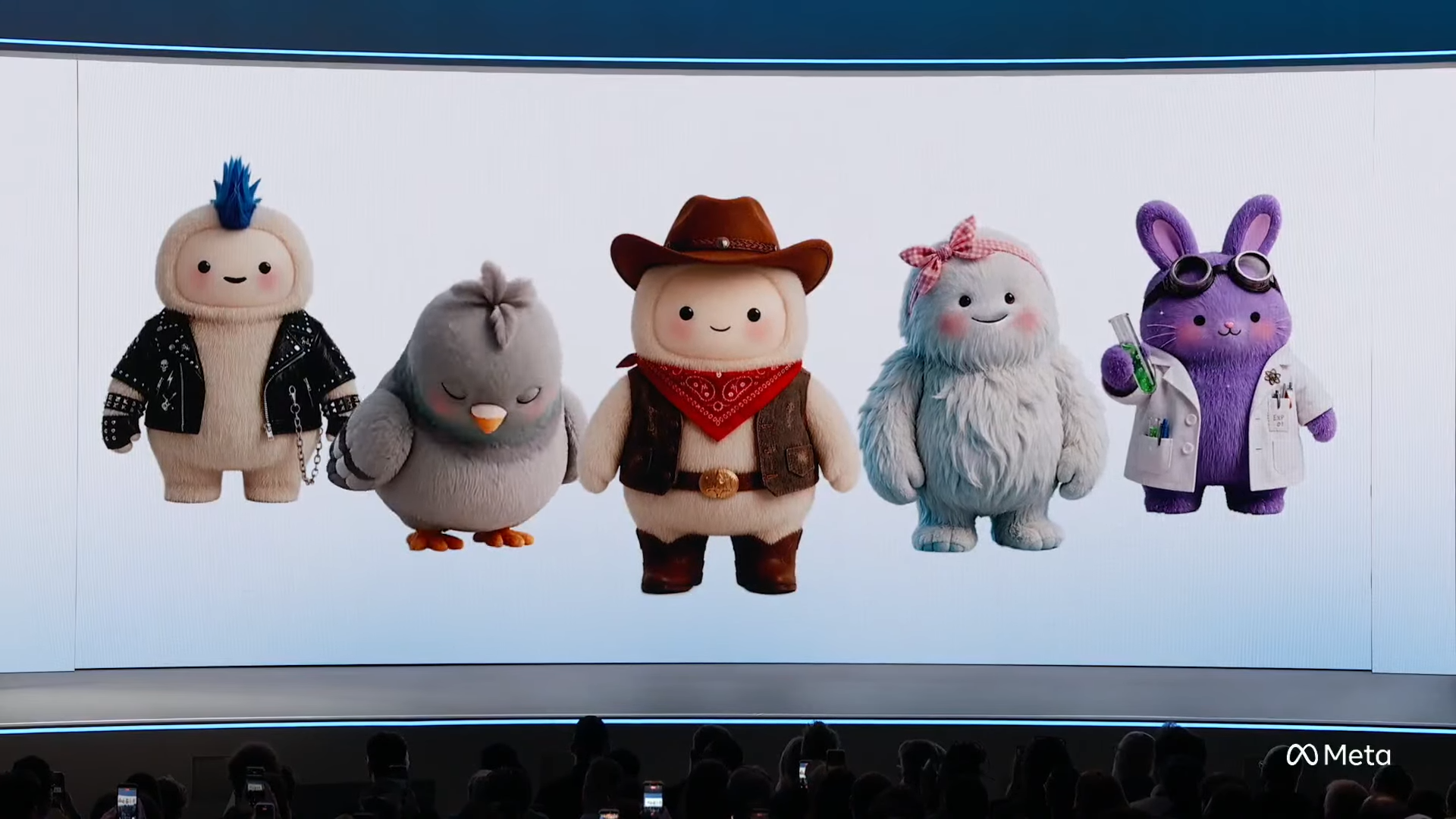
▲Different Muse characters showcased at the Connect conference on September 24, which can be paired with different voice styles (Image source: Meta)
On October 13, Meta released the Muse Wonder series of models, focusing on strengthening cross-session memory and the ability to execute tasks continuously. Meta stated at the time that the new models would be used for Muse and would be made available to subscribers first.
Next, Meta plans to bring voice conversations to AI glasses and Muse Charm, both of which debuted at the Connect conference on September 24. According to the introduction at the time, Muse will be able to work with the products, flyers, or lists seen through the AI glasses and carry out tasks at the user's request. Muse Charm, meanwhile, is a standalone device that users can carry with them to talk and interact with Muse.
Conclusion: Connecting devices with Muse, Meta is building an always-with-you AI entry point
Glasses and Charm will also become channels through which Meta promotes its AI subscription services. On Meta's third-quarter earnings call in October, Zuckerberg said the company hopes to expand the use of Muse through glasses and generate revenue from software services and paid subscriptions.
The newly added real-time voice and dynamic avatars allow users to chat with characters they have customized while getting things done. Judging from this design, Meta is seeking to make personal AI more companion-like through a voice and expressions, enabling users to communicate their shopping, travel, and other needs while chatting. As Muse becomes integrated with wearable devices, this interaction is also expected to extend from the phone screen to more everyday scenarios.
jQuery(document).ready(function($) { $.post('https://www.zhidx.com/wp-admin/admin-ajax.php', {action: 'wpt_view_count', id: '607981'}); });No text provided.


