 © 01net/Samsung
The Korean manufacturer adapts AI server memory technology to mobile constraints. SK Hynix and Apple are already in the loop. The AI in your next phone could be independent of the cloud.

Samsung Galaxy
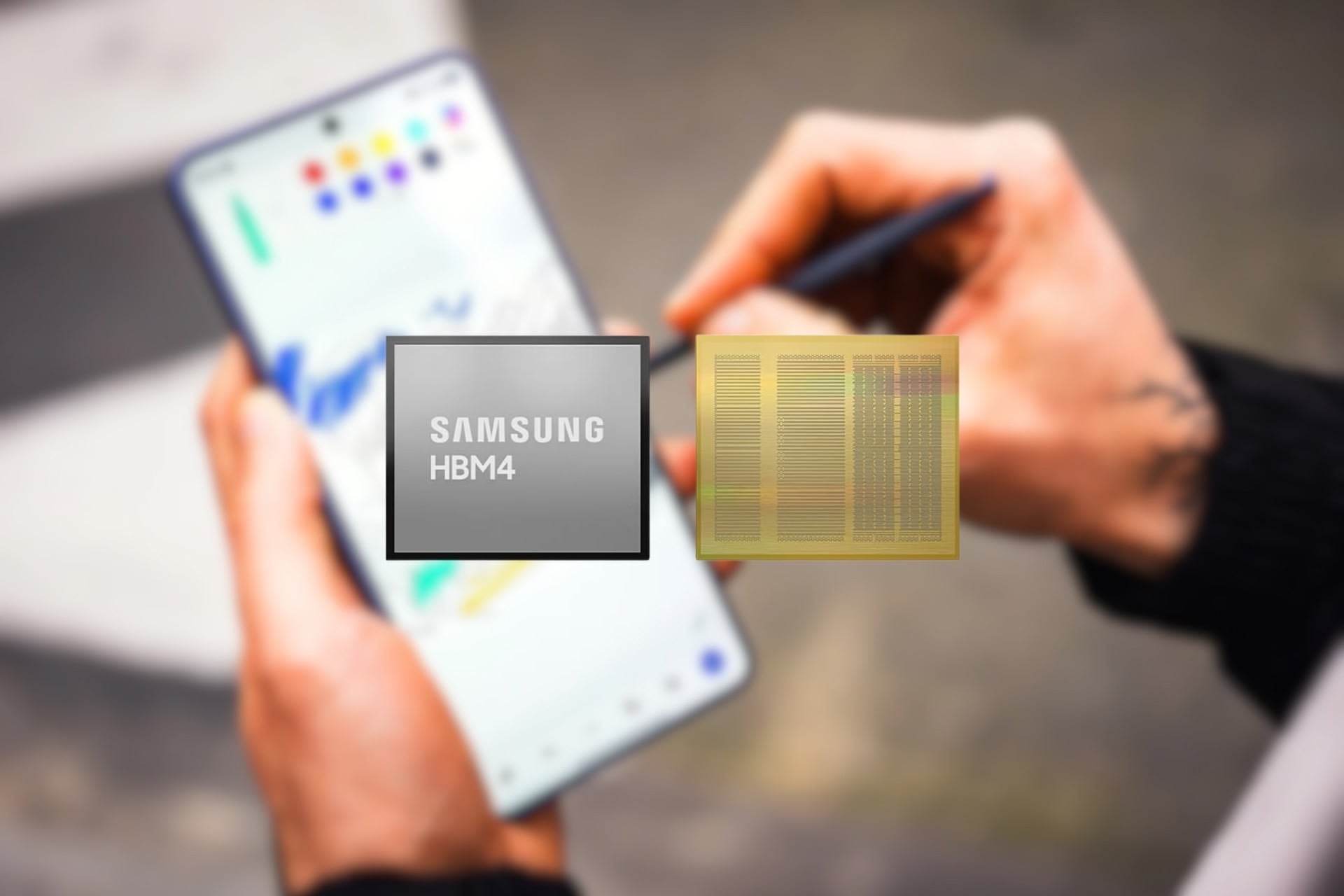
HBM is this 3D stacked memory you find today in Nvidia and AMD data center GPUs, where large AI models are trained. Samsung, which already produces it for servers, is working on a version suitable for smartphones and tablets. The Korean giant uses advanced packaging techniques to stack memory layers in a compact and energy-efficient format. The announced gain: 30% additional bandwidth compared to current mobile memory.
Why memory is the real bottleneck for AI on smartphones
Today, embedded AI assistants (Gemini Nano and Gemma at Google, Phi-3 mini at Microsoft) operate with lightweight language model versions, optimized for low memory consumption. The result is accurate for simple tasks, but as soon as complexity increases, the phone sends the request to the cloud. The reason is material: the LPDDR5X memory used in high-end smartphones isn't fast enough to power a real-time neural network.
This isn't a new topic. In February 2025, Samsung's semiconductor division technical director, Song Jae-hyuk, had already presented at the ISSCC conference a technology called LPW DRAM that he himself referred to as "mobile HBM". Objectives: a bandwidth of over 200 Go/s (+166% compared to LPDDR5X) and a power consumption reduced by half. First commercial product announced for 2028. Samsung would co-develop this module with Apple and its own Galaxy division.
Samsung is not the only one involved, and price will hold everyone back
SK Hynix is preparing a competing approach called Vertical Fan-Out, also aimed at mobile. The race is on between the two Korean memory giants, with mobile chipmakers (Qualcomm, MediaTek, Apple) lurking in the wings who will have to adapt their processors to take advantage of it.
The remaining obstacle that technology alone will not overcome: price. Mobile DRAM has reached historically high levels in 2025-2026, driven precisely by the AI demand on the server side. As long as this tension persists, smartphone manufacturers will hesitate to integrate more expensive memory into consumer devices.
👉🏻 Follow real-time tech news: add 01net to your Google sources, and subscribe to our WhatsApp channel.
Source: ETNews








- Google Play Store
- 4K Video Downloader Plus
- VLC Media Player
- Adobe Reader
- uTorrent
- WinRAR
- Xender
- Google Chrome
- CCleaner
- Mozilla Firefox
- Avast Free
- ChatGPT
- Microsoft 365
- Opera One
- Avast One


