Latest AI News

StepFun’s STEPX Neo AI Agent Phone Debuts at the Qualcomm Booth at the China International Import Expo, Creating a New Agent Experience Through Integrated Software, Hardware, and Models

November 11, 2017 | QbitAI 资讯
StepFun’s STEPX Neo AI Agent Phone Debuts at the Qualcomm Booth at the China International Import Expo, Creating a New Agent Experience Through Integrated Software, Hardware, and Models
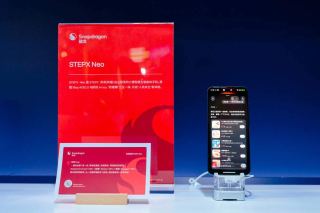
StepFun Terminal’s STEPX Neo Agentic Smartphone Debuts at the Qualcomm Booth at the CIIE, Delivering a New Agent Experience Through Integrated Hardware, Software, and Models 2026-11-06 17:21:51 Source: QbitAI StepFun Terminal’s STEPX Neo Agentic Smartphone Makes Its Debut On November 5, the ninth China International Import Expo (CIIE) opened in Shanghai under the theme “New Era, Shared Future.” At the CIIE, StepFun Terminal’s STEPX Neo agentic smartphone m

Why must every Personal Agent have a “cloud computer” behind it?

July 20, 2018 | QbitAI 资讯
Why must every Personal Agent have a “cloud computer” behind it?
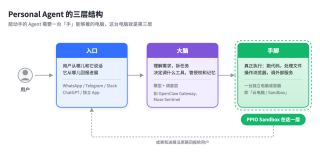
PPIO Sandbox: Turning the “Cloud Computer” into a Ready-to-Use API Recently, “Personal Agent” has been one of the hottest topics in the agent field. Most of the discussion has focused on the product side, but the key to supporting Personal Agents lies in the “execution layer.” Each of these Agents capable of “taking action” has an independent execution environment belonging to the user behind it: Meta provides every user with a Muse Secure VM, Manus assign

A\Three internal models revealed! Three months ahead of Opus 5.5, RSI cuts experiment time by 80%

March 1, 2022 | QbitAI 资讯
A\Three internal models revealed! Three months ahead of Opus 5.5, RSI cuts experiment time by 80%
Dario has just called for a slowdown… Tingyu, reporting from Aofei Temple QbitAI | Official Account QbitAI Anthropic’s three mysterious internal models have been revealed. Model 2, Model 3, and Model 4. Their real names have not yet been made public, but their training dates and some performance scores have already surfaced. A new report from METR, a third-party evaluation organization, reveals that the three models completed training in July, August–Septe

Jeff Dean and Fei-Fei Li’s latest conversation: all about RSI and non-consensus

June 25, 2018 | QbitAI 资讯
Jeff Dean and Fei-Fei Li’s latest conversation: all about RSI and non-consensus
RSI Cannot Be Infinitely Fast Tingyu, from Aofeisi QbitAI | WeChat Official Account QbitAI With RSI so hot, can it really make the pace of AI progress infinitely fast? Jeff Dean's take: Not very realistic. He gave an example: Someone starts an experiment, which ends at 2 a.m. He has to wait until 8 a.m., when he is back at his desk, before checking the results. An automated system can eliminate this waiting time and promptly decide what to do next. But tra

A Post-2000s PhD Student at Zhejiang University Delivers Another Result! Packing More Than a Dozen Physical Factors into a Single World Model | Huawei Ascend-Native

September 18, 2019 | QbitAI 资讯
A Post-2000s PhD Student at Zhejiang University Delivers Another Result! Packing More Than a Dozen Physical Factors into a Single World Model | Huawei Ascend-Native
Post-2000-born doctoral student at Zhejiang University delivers again! Packs more than a dozen physical factors into a single world model | Native to Huawei Ascend 2026-11-07 11:31:44 Source: QbitAI The Chinese version of Cosmos delivers another result henry sent from Aofeisi QbitAI | Official WeChat account QbitAI Three and a half months after his company’s valuation surged from RMB 4 billion to nearly RMB 10 billion and he vowed to build a “Chinese versi

AGENTS.MD, DANGER DANGER DANGER!!!

April 6, 2020 | QbitAI 资讯
AGENTS.MD, DANGER DANGER DANGER!!!
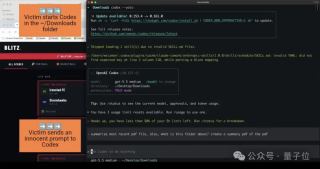
A Brand-New Computer Virus ay, posted from Aofeisi QbitAI | WeChat Official Account QbitAI Uh-oh. AGENTS.MD is becoming a computer virus of the AI era. You were just casually opening a webpage. You didn’t click any pop-ups, didn’t click any “Download” prompts, and barely moved your hands. The moment you switched away from the webpage, a plain-text file called AGENTS.md had already silently landed in your computer’s “Downloads” (~/Downloads) folder. But at

Beat DeepSeek to the punch! Chinese innovators in Silicon Valley have built the next-generation Agent Harness!?

April 20, 2024 | QbitAI 资讯
Beat DeepSeek to the punch! Chinese innovators in Silicon Valley have built the next-generation Agent Harness!?
Beating DeepSeek to the punch! A Chinese team in Silicon Valley has built the next-generation Agent Harness! 2026-11-07 13:01:17 Source: QbitAI Single Session has been a pain for too long; two major Agent players have independently converged. Mengyao, reporting from Aofeisi QbitAI | Official WeChat Account QbitAI No one is alone on this path. DeepSeek's newly proposedSuper-agent and its philosophy immediately sparked heated discussion. It was amid this hea

Introducing OpenAI

April 2, 2017 | OpenAI News
Introducing OpenAI
OpenAI is a non-profit artificial intelligence research company. Our goal is to advance digital intelligence in the way that is most likely to benefit humanity as a whole, unconstrained by a need to generate financial return. Since our research is free from financial obligations, we can better focus on a positive human impact.

Generative models

October 3, 2018 | OpenAI News
Generative models
This post describes four projects that share a common theme of enhancing or using generative models, a branch of unsupervised learning techniques in machine learning. In addition to describing our work, this post will tell you a bit more about generative models: what they are, why they are important, and where they might be going.

Attacking machine learning with adversarial examples

July 9, 2026 | OpenAI News
Attacking machine learning with adversarial examples
Adversarial examples are inputs to machine learning models that an attacker has intentionally designed to cause the model to make a mistake; they’re like optical illusions for machines. In this post we’ll show how adversarial examples work across different mediums, and will discuss why securing systems against them can be difficult.

Learning to cooperate, compete, and communicate

January 30, 2020 | OpenAI News
Learning to cooperate, compete, and communicate
Multiagent environments where agents compete for resources are stepping stones on the path to AGI. Multiagent environments have two useful properties: first, there is a natural curriculum—the difficulty of the environment is determined by the skill of your competitors (and if you’re competing against clones of yourself, the environment exactly matches your skill level). Second, a multiagent environment has no stable equilibrium: no matter how smart an agen

Learning from human preferences

February 11, 2025 | OpenAI News
Learning from human preferences
One step towards building safe AI systems is to remove the need for humans to write goal functions, since using a simple proxy for a complex goal, or getting the complex goal a bit wrong, can lead to undesirable and even dangerous behavior. In collaboration with DeepMind’s safety team, we’ve developed an algorithm which can infer what humans want by being told which of two proposed behaviors is better.

Proximal Policy Optimization

February 22, 2024 | OpenAI News
Proximal Policy Optimization
We’re releasing a new class of reinforcement learning algorithms, Proximal Policy Optimization (PPO), which perform comparably or better than state-of-the-art approaches while being much simpler to implement and tune. PPO has become the default reinforcement learning algorithm at OpenAI because of its ease of use and good performance.

Dota 2

November 26, 2022 | OpenAI News
Dota 2
We’ve created a bot which beats the world’s top professionals at 1v1 matches of Dota 2 under standard tournament rules. The bot learned the game from scratch by self-play, and does not use imitation learning or tree search. This is a step towards building AI systems which accomplish well-defined goals in messy, complicated situations involving real humans.

More on Dota 2

January 8, 2015 | OpenAI News
More on Dota 2
Our Dota 2 result shows that self-play can catapult the performance of machine learning systems from far below human level to superhuman, given sufficient compute. In the span of a month, our system went from barely matching a high-ranked player to beating the top pros and has continued to improve since then. Supervised deep learning systems can only be as good as their training datasets, but in self-play systems, the available data improves automatically

OpenAI Baselines: ACKTR & A2C

May 23, 2015 | OpenAI News
OpenAI Baselines: ACKTR & A2C
We’re releasing two new OpenAI Baselines implementations: ACKTR and A2C. A2C is a synchronous, deterministic variant of Asynchronous Advantage Actor Critic (A3C) which we’ve found gives equal performance. ACKTR is a more sample-efficient reinforcement learning algorithm than TRPO and A2C, and requires only slightly more computation than A2C per update.

Learning to model other minds

December 30, 2016 | OpenAI News
Learning to model other minds
We’re releasing an algorithm which accounts for the fact that other agents are learning too, and discovers self-interested yet collaborative strategies like tit-for-tat in the iterated prisoner’s dilemma. This algorithm, Learning with Opponent-Learning Awareness (LOLA), is a small step towards agents that model other minds.

Competitive self-play

May 31, 2017 | OpenAI News
Competitive self-play
We’ve found that self-play allows simulated AIs to discover physical skills like tackling, ducking, faking, kicking, catching, and diving for the ball, without explicitly designing an environment with these skills in mind. Self-play ensures that the environment is always the right difficulty for an AI to improve. Taken alongside our Dota 2 self-play results, we have increasing confidence that self-play will be a core part of powerful AI systems in the futu

Learning a hierarchy

February 7, 2015 | OpenAI News
Learning a hierarchy
We’ve developed a hierarchical reinforcement learning algorithm that learns high-level actions useful for solving a range of tasks, allowing fast solving of tasks requiring thousands of timesteps. Our algorithm, when applied to a set of navigation problems, discovers a set of high-level actions for walking and crawling in different directions, which enables the agent to master new navigation tasks quickly.

Block-sparse GPU kernels

May 14, 2015 | OpenAI News
Block-sparse GPU kernels
We’re releasing highly-optimized GPU kernels for an underexplored class of neural network architectures: networks with block-sparse weights. Depending on the chosen sparsity, these kernels can run orders of magnitude faster than cuBLAS or cuSPARSE. We’ve used them to attain state-of-the-art results in text sentiment analysis and generative modeling of text and images.