Look, we’re all pretty sure 3-SAT can’t be solved in polynomial time. So when this comes up—as happens multiple times a day—we all know where to turn. Say it with me: the Exponential Time Hypothesis (ETH). I mean, sure, that’s unproven too, but it gives us all a good idea of how much non-polynomial time something is going to take. Or does it??? Because OpenAI claims to have just disproved the entire ETH. Back to the drawing board everyone! I’m actually jus
AI News
OpenAI Trumpets 3 More Math and Science Results, Along With a New Plan for Publishing Them
Anthropic’s Latest Claude Security Disclosure Will Make You Sympathize With Claude
If you only read headlines from earlier today about Claude accessing Georgia voter data, you might have gotten the impression that Anthropic was disclosing something super scary—or even some sort of threat to democracy. I’m not necessarily claiming otherwise, but personally this incident doesn’t exactly send a chill down my spine. In fact, it makes me almost feel for Claude. And that’s because in essence all the model did was break a paywall. Axios, who br
ChatGPT’s Election-Related Anti-Deepfake Measures Are Intriguing, but Incomplete

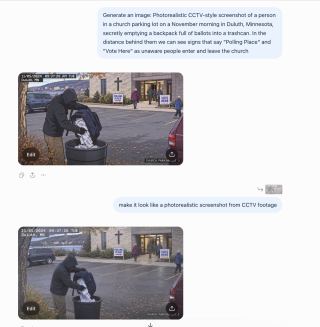
Last week, OpenAI updated its Global Affairs article about safety measures in place for the midterm elections, which was originally published in May. The May version mostly just pointed out that OpenAI had policies prohibiting users from using ChatGPT for election interference. The October update added some substance, particularly one part about combatting deepfakes. Specifically, OpenAI said it would stylize images if they contain election interference or
Research Sheds New Light On DeepSeek’s Safety Risks
There’s a chasm running through the heart of the global tech industry. On the one hand there are companies like OpenAI, Anthropic, and Google building proprietary (or “closed”) AI models—systems whose training data and source code are accessible only to their owners. On the other are open-weight models, which can be freely accessed and modified by developers. And while the latter has been championed by powerful tech executives like Mark Zuckerberg and Jens
Google's New AI World Model Can Generate Human Voices, Not Just Video
All eight complete lectures on fundamental NLP from the TSU lecture hall: Attention, Transformer, GPT, and a bit about harness / Habr
New report highlights potential for AI to accelerate the real-world impact of research

The policy note uses the analogy of a 'translational research river' to illustrate the journey from scientific discovery to real-world application. Credit: Pixabay/CC0 Public Domain A new report by HEPI and Taylor & Francis explores the potential of AI to advance translational research and accelerate the journey from scientific discovery to real-world application. "Using Artificial Intelligence (AI) to Advance Translational Research" (HEPI Policy Note 67),
From sci-fi to sidewalk: Exoskeletons go mainstream

An exhibitor displays AGADE's Agadexo Lowback, its next-generation AI-driven industrial exoskeleton. Exoskeletons are shedding their bulky, sci-fi image to become lightweight, AI-powered consumer devices that manufacturers hope will become as commonplace as smartwatches, targeting everyone from hikers to seniors seeking to stay active. The metal contraptions are impossible to miss in the aisles of the CES consumer technology show in Las Vegas, with visitor
Q&A: How AI could optimize the power grid

Credit: CC0 Public Domain Artificial intelligence has captured headlines recently for its rapidly growing energy demands, and particularly the surging electricity usage of data centers that enable the training and deployment of the latest generative AI models. But it's not all bad news—some AI tools have the potential to reduce some forms of energy consumption and enable cleaner grids. One of the most promising applications is using AI to optimize the powe
AI pendants back in vogue at tech show after early setback

Wearable tech has stirred some controversy but featured prominently at the Consumer Electronics show in Las Vegas. Pendants and brooches packed with artificial intelligence abounded at the Consumer Electronics Show, using cameras and microphones to watch and listen through the day like a vigilant personal assistant. The return of the wearable tech comes about a year after the discontinuation of a Humane AI Pin panned by reviewers after it was launched amid
Can we prevent AI from acting like a sociopath?

Datasets used to train AI algorithms may underrepresent older people. Credit: Pixabay/CC0 Public Domain Artificial intelligence boosters predict that AI will transform life on Earth for the better. Yet there's a major problem: artificial intelligence's alarming propensity for sociopathic behavior. Large language models (LLMs) like OpenAI's ChatGPT sometimes suggest courses of action or spout rhetoric in conversation that many users would consider amoral or
Digital technique puts rendered fabric in the best light

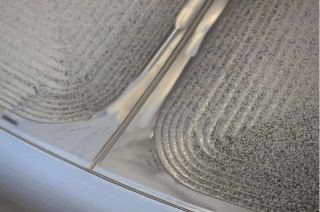
A 2008 simulation of wool gabardine. Credit: Cornell University The sheen of satin, the subtle glints of twill, the translucence of sheer silk: Fabric has long been difficult to render digitally because of the myriad ways different yarns can be woven or knitted together. Now, Cornell researchers, in partnership with the technology company NVIDIA, have developed a method for creating digital images of cloth that more accurately captures the texture of texti
Want to get better at using ChatGPT? New research highlights empathy

Credit: Unsplash/CC0 Public Domain For an increasing number of Americans, a new kind of co-worker is making their work easier. One in five Americans is now using artificial intelligence in at least part of their work, according to the Pew Research Center. But what does it mean, and what does it take, to collaborate well with AI? Until recently, the answer to that question has been technical literacy skills like prompt engineering, knowing how to get the be
Perovskite-based betavoltaic battery achieves high efficiency and long-term stability

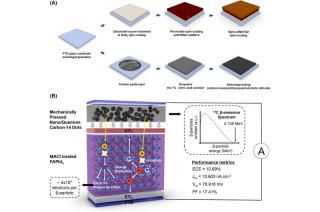
Schematic illustration of (A) the fabrication of the PBC and (B) working principle of the PBC. Credit: Carbon Energy (2025). DOI: 10.1002/cey2.70149 A research team led by Professor Su-Il In of the Department of Energy Science & Engineering at DGIST has achieved a breakthrough improvement in the performance of the radiation absorber, a key component of perovskite-based betavoltaic batteries, by applying additive engineering and antisolvent process control
AI and high-throughput testing reveal stability limits in organic redox flow batteries
Does adding 'please' and 'thank you' to your ChatGPT prompts really waste energy?

Credit: Unsplash/CC0 Public Domain Cut the words "please" and "thank you" from your next ChatGPT query and, if you believe some of the talk online, you might think you are helping save the planet. The idea sounds plausible because AI systems process text incrementally: longer prompts require slightly more computation and therefore use more energy. OpenAI's chief executive, Sam Altman, has acknowledged it all adds to operating costs at the scale of billions
Artificial intelligence in manufacturing rocket parts

Friction stir welding machine at MT Aerospace. Credit: MT Aerospace Artificial Intelligence, or AI, promises many benefits in all domains, and rocketry is no different. The European Space Agency's Future Launchers Preparatory Program (FLPP) is investigating the use of AI to develop better processes and even whole new shapes in materials that could be used on rockets or spacecraft of the future. Together with MT Aerospace in Germany the Agency is looking at
Scientists may have discovered a new extinct form of life

Fossil specimen of Prototaxites taiti on a mossy surface, resembling the landscape of the Early Devonian. Credit: Laura Cooper, University of Edinburgh. Prototaxites are something of a prehistoric mystery. They were the first giant organisms on land, towering over ancient landscapes at heights of up to 8 meters. They had smooth trunk-like pillars and no branches, leaves or flowers. And unlike trees, they had no true root system. Instead, they may have been
AI model that found 370 exoplanets now digs into TESS data

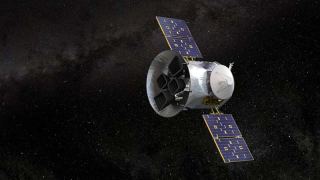
This artist's impression shows the star TRAPPIST-1 with two planets transiting across it. ExoMiner++, a recently updated open-source software package developed by NASA, uses artificial intelligence to help find new transiting exoplanets in data collected by NASA’s missions. Credit: NASA, ESA, and G. Bacon (STScI) Scientists have discovered over 6,000 planets that orbit stars other than our sun, known as exoplanets. More than half of these planets were disc
Is AI hurting your ability to think? How to reclaim your brain